Guide
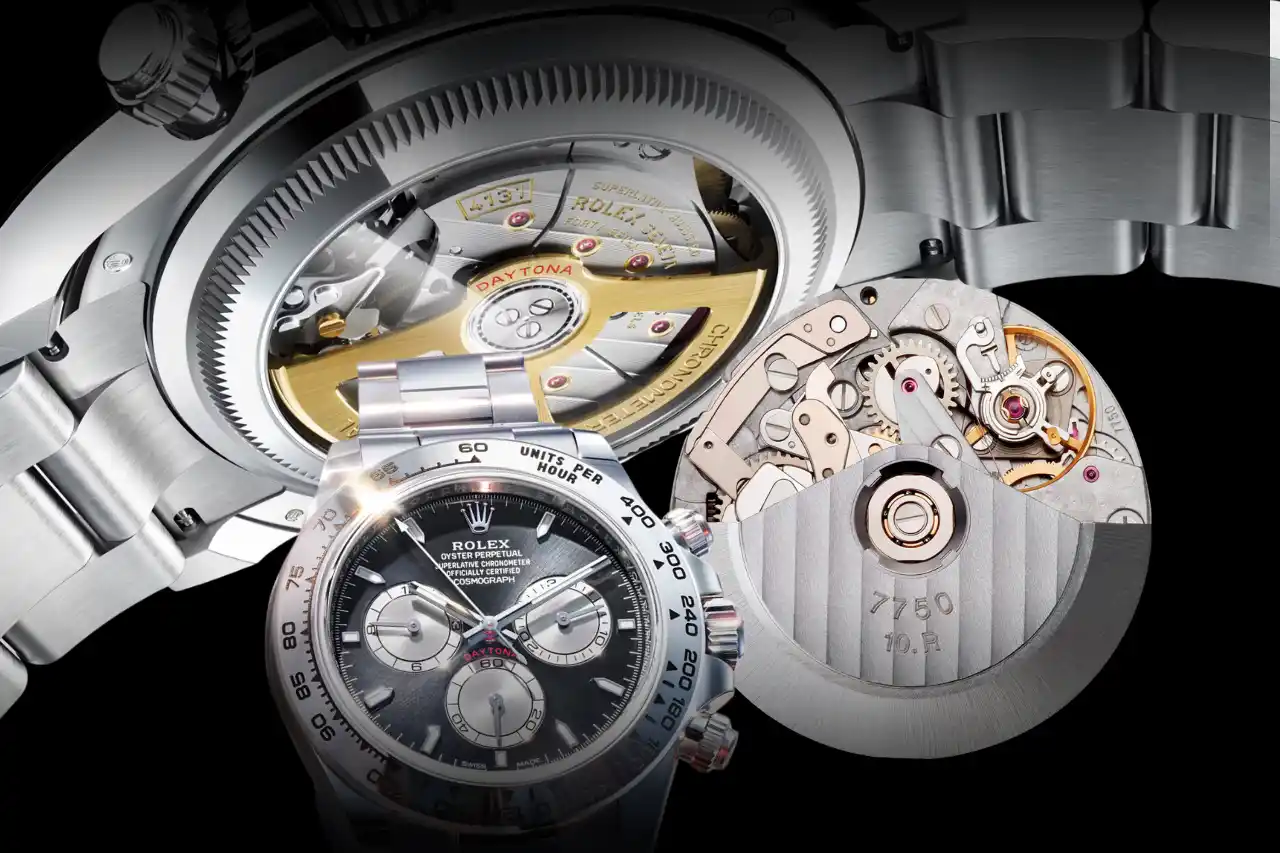
A watch balance wheel is a weighted wheel inside a mechanical watch movement that oscillates back and forth to help regulate timekeeping. It works with a thin spiral spring known as the hairspring or balance spring. Together, they form the movement’s regulating oscillator.
The hairspring provides a restoring force that helps return the balance wheel toward its central position, while the wheel’s inertia carries it through each swing. The escapement supplies timed impulses to sustain these oscillations and allows the gear train to advance in controlled steps.
The balance assembly plays an essential role in regulating a mechanical watch’s timekeeping and maintaining its intended rate.
How Does the Balance Wheel Regulate Timekeeping

In a typical mechanical watch with a lever escapement, the balance wheel, hairspring and escapement work together in a continuous cycle.
- Energy reaches the escapement: Energy stored in the mainspring travels through the gear train to the escape wheel, which is held in place by the escapement.
- The balance wheel unlocks the escapement: As the balance wheel swings, its roller jewel interacts with the pallet fork, allowing the escape wheel to advance.
- The escapement delivers an impulse: A tooth on the escape wheel acts on the pallet fork, which transfers an impulse to the balance wheel to replenish energy lost during oscillation.
- The balance wheel continues oscillating: The wheel’s inertia carries it through its swing, while the hairspring’s restoring force helps reverse its direction.
- The gear train advances in controlled steps: The escapement repeatedly locks and unlocks the escape wheel, allowing the gear train to advance at a rate governed by the balance assembly.
What Is the Difference Between a Balance Wheel and a Hairspring
The balance wheel and hairspring, also known as the balance spring, work together to regulate a mechanical watch’s timekeeping, but they serve different functions. The balance wheel provides the oscillating mass, while the balance spring supplies the restoring force that helps control its motion.
| Component | Function |
| Balance wheel | Oscillates back and forth, providing the mass needed for the regulating system. |
| Hairspring (balance spring) | Provides the restoring force that helps determine the balance assembly’s natural oscillation rate. |
These components must work together correctly for the movement to maintain a consistent rate. A fault affecting either component can disrupt the balance assembly’s operation, although other movement parts can also cause timekeeping problems.
What Is the Balance Wheel Frequency in a Watch
Balance wheel frequency describes how frequently a mechanical watch’s balance assembly oscillates. It is commonly expressed in hertz (Hz) or vibrations per hour (vph).
One complete oscillation consists of a swing in one direction and back again. In common watch specifications, a vibration refers to one half-swing, while hertz measures the number of complete oscillations per second.
Common mechanical watch frequencies include:
| Vibrations per Hour (vph) | Frequency (Hz) | Vibrations per Second |
| 18,000 | 2.5 | 5 |
| 21,600 | 3 | 6 |
| 25,200 | 3.5 | 7 |
| 28,800 | 4 | 8 |
| 36,000 | 5 | 10 |
For example, a movement operating at 28,800 vph completes four full oscillations per second, equivalent to eight half-swings per second.
Does a Higher Balance Wheel Frequency Mean Better Accuracy
A higher frequency does not guarantee greater accuracy. Although the balance assembly oscillates more frequently, a watch’s timekeeping performance also depends on its regulation, condition, lubrication, positional behavior and resistance to external influences.
Higher-frequency movements require more frequent energy impulses from the escapement, which may increase energy consumption depending on the movement’s design and efficiency.
How Does the Balance Wheel Affect Watch Accuracy
The balance assembly plays a central role in determining a mechanical watch’s rate. The hairspring, escapement and other movement components must work together to maintain consistent timing.
Several factors can influence timekeeping:
- Regulation: The movement’s rate may require adjustment to bring it closer to its intended performance.
- Position: Gravity, friction and the movement’s geometry can affect timekeeping differently depending on the watch’s position.
- Magnetism: Magnetic fields can interfere with susceptible hairsprings, potentially changing their effective behavior and affecting the movement’s rate.
- Lubrication and wear: Deteriorated lubricants, friction and worn components can affect the movement’s operation.
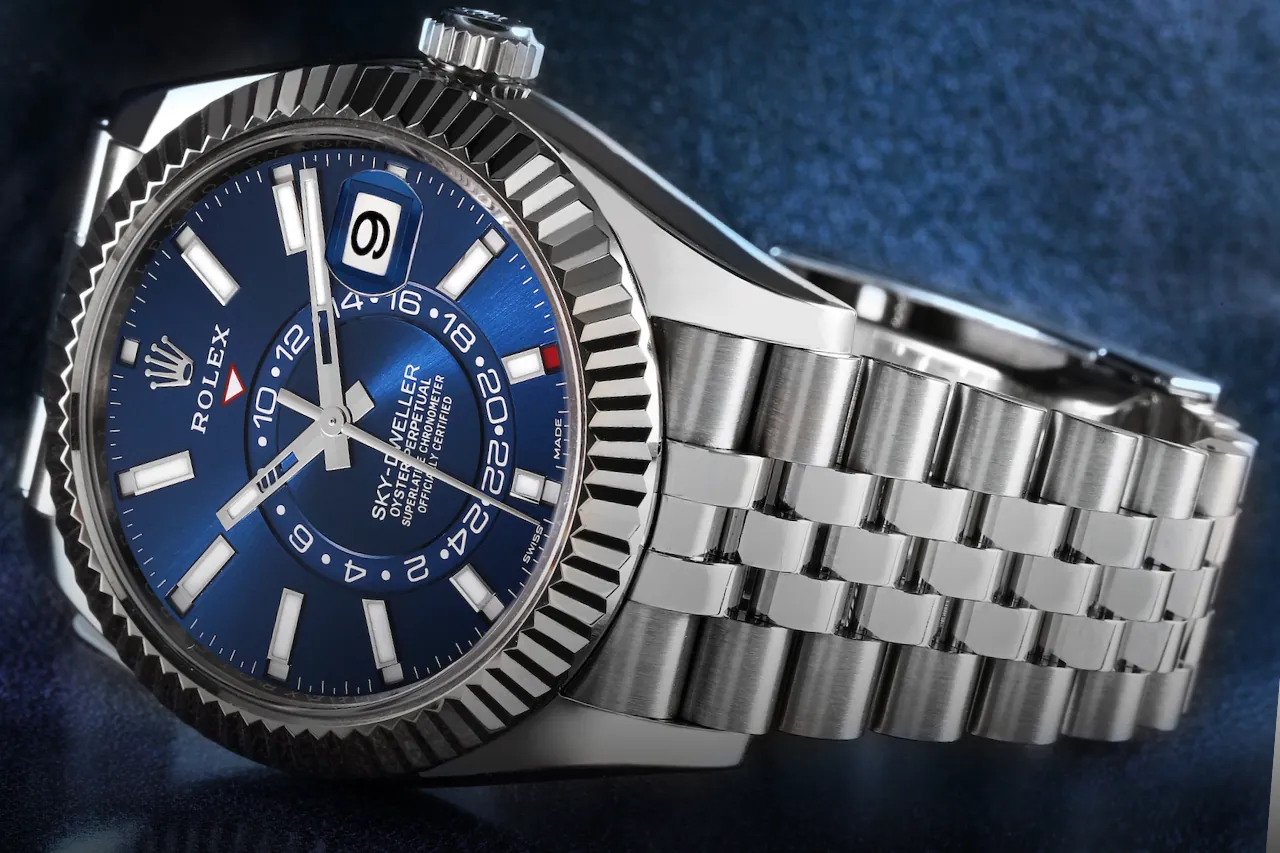
- Temperature: Temperature changes can influence the properties of some movement components, although modern materials and designs help reduce these effects. For example, Rolex states that its Parachrom hairspring, made from an alloy of niobium, zirconium and oxygen, is unwavering in the face of temperature variations and insensitive to magnetic fields.
- Mainspring power: Timekeeping performance can vary as the mainspring’s available energy changes, depending on the movement’s design and condition.
Some variation is normal in mechanical watches. The acceptable range depends on the movement, its specifications and the manufacturer’s stated standards.
A substantial or sudden change in timekeeping should be investigated rather than automatically attributed to the balance wheel.
How Is a Watch Balance Wheel Regulated
Regulating a mechanical watch involves adjusting its rate so that it keeps time closer to its intended specifications. The method depends on the balance assembly’s design.
- Regulator systems: A regulator index changes the effective active length of the hairspring. Shortening the active length generally makes it run faster, while lengthening it generally makes the watch run slower.
- Free-sprung balances: These systems do not use a conventional regulator index. Instead, the watchmaker adjusts dedicated regulating weights or screws, where provided, to change the balance wheel’s effective moment of inertia and fine-tune its rate.
A timing machine, also called a timegrapher, helps a watchmaker assess the movement’s rate and beat error and estimate its amplitude. Beat error indicates a timing difference between the balance assembly’s alternating beats. The timegrapher’s amplitude estimate depends partly on entering the correct lift angle for the movement.
The watch may also be tested in different positions to evaluate variations in timekeeping. Regulation alone cannot resolve every problem; magnetism, damage, contamination or lubrication issues may need to be addressed first.
What Is Balance Wheel Amplitude
Amplitude refers to the angle, measured in degrees, through which the balance wheel swings from its central position to one extreme. It helps a watchmaker assess the balance assembly’s performance alongside measurements such as rate and beat error.
Unusually low or inconsistent amplitude may indicate problems with energy delivery, excessive friction, lubrication or damaged components. However, an amplitude reading must be interpreted according to the movement’s specifications, winding state and test conditions. There is no single ideal amplitude that applies to every mechanical watch.
What Can Damage or Disrupt a Watch’s Balance Assembly

The balance assembly contains delicate components that must move freely and maintain their intended relationship. Several factors can damage these components or interfere with their operation.
- Impact or shock: A hard knock or drop can damage the balance staff, pivots or hairspring. The extent of the damage depends on the impact and the movement’s construction.
- Magnetism: Magnetic fields can disrupt susceptible hairsprings, sometimes causing adjacent coils to stick together and changing the movement’s rate. This affects operation without necessarily causing physical damage.
- Contamination: Dirt, debris or unsuitable substances inside the movement can interfere with the hairspring or other small components.
- Improper handling or repair: Incorrect handling during servicing can distort the hairspring, damage delicate parts or affect the assembly’s adjustment.
- Wear and lubrication problems: Deteriorated lubricants, excessive friction and worn components can impair the movement’s operation.
A sudden change in accuracy, unexpected stopping or unusual behavior following an impact should be checked by a qualified watchmaker. Avoid attempting to adjust or handle the balance assembly yourself, as its components are delicate and difficult to restore correctly.
What Happens When a Watch Balance Wheel Has a Problem
A fault affecting the balance wheel, hairspring or related movement components can produce several symptoms. The exact behavior depends on the underlying cause, and similar symptoms may arise from different parts of the movement.
1. The Watch Gains or Loses Time
If the balance assembly does not maintain its intended rate, the watch may gain or lose time.
Possible causes include incorrect regulation, a hairspring issue, contamination, wear or a fault elsewhere in the movement. A watch that consistently runs fast or slow may need adjustment, but the underlying cause should be assessed before deciding on the appropriate repair.
2. The Watch Runs Inconsistently
A mechanical watch may keep reasonable time in one position but perform differently in another. Positional variation can be related to the balance assembly, hairspring, lubrication or other movement components.
Some positional variation is expected in mechanical watches. However, a noticeable deterioration in consistency, particularly if it develops suddenly, may warrant inspection.
3. The Watch Stops Unexpectedly
If the balance wheel cannot oscillate freely, the movement may stop. Possible causes include a damaged or tangled hairspring, a displaced component, contamination or a problem elsewhere in the movement.
A stopped watch does not necessarily have a balance wheel fault. Issues involving the mainspring, winding system, gear train or escapement can produce similar symptoms.
If the watch stops repeatedly despite being adequately wound, a watchmaker can investigate whether the problem originates in the regulating system or another part of the movement.
Can a Watch Balance Wheel Be Repaired or Replaced
Whether a watch balance wheel can be repaired or needs replacement depends on the movement’s design, the nature of the damage and the availability of suitable parts.
A watchmaker will examine the balance wheel, hairspring, pivots and related components to identify the source of the problem. The repair process generally involves the following steps:
- Inspect the movement: Examine the balance assembly and other relevant components for visible damage, contamination or signs of wear.
- Check timekeeping performance: Use appropriate watchmaking equipment to assess the movement’s rate and consistency.
- Identify the cause: Determine whether the problem relates to the balance wheel, hairspring, escapement, regulation or another part of the movement.
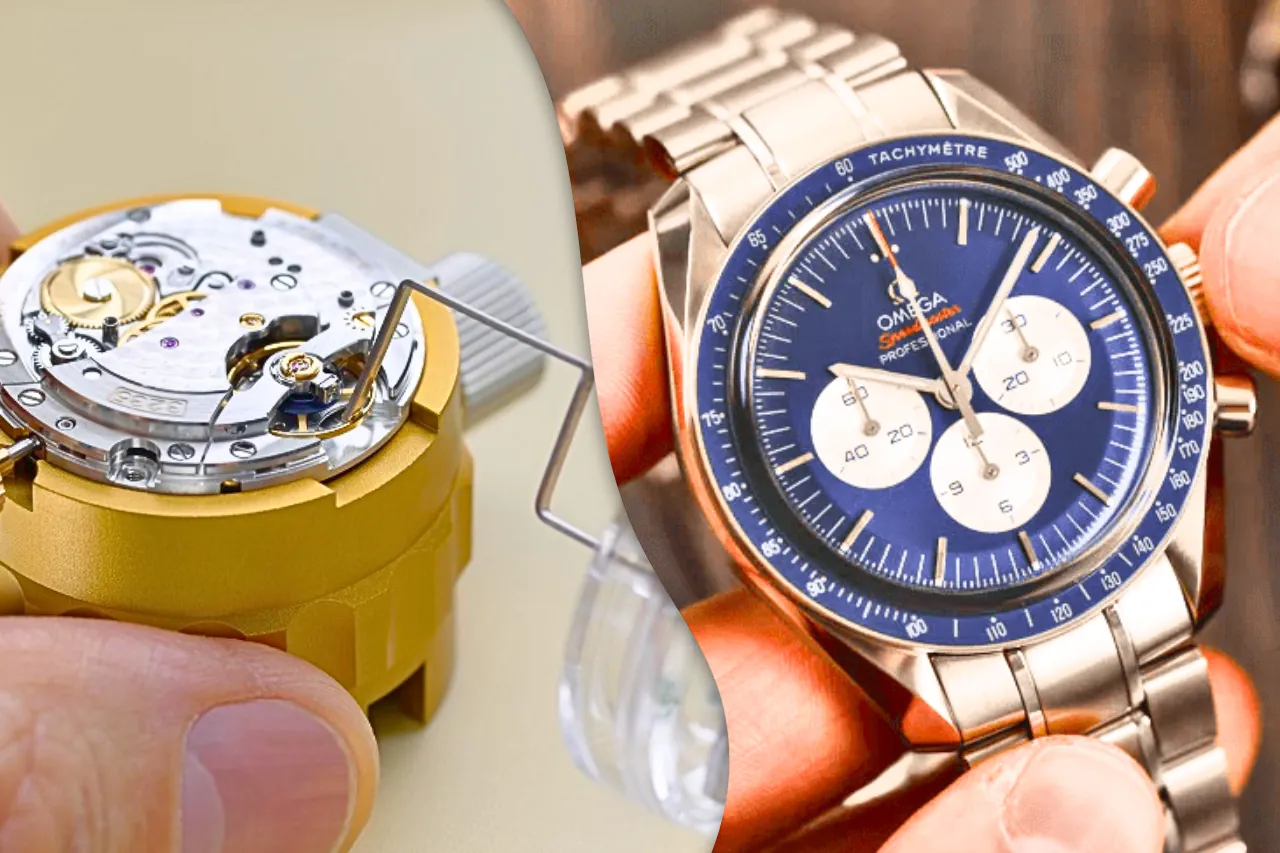
- Carry out the necessary work: Depending on the diagnosis, this may involve adjustment, cleaning, correcting a hairspring issue or replacing a damaged component.
- Test the movement: Check its performance after the work and assess whether further servicing or adjustment is required.
Some faults can be addressed without replacing the entire balance assembly. In other cases, replacement may be necessary, particularly if a component is damaged beyond practical repair or the manufacturer specifies replacement of the relevant assembly.
Not every timekeeping issue requires a full movement overhaul, and not every balance assembly fault can be resolved through simple regulation. The appropriate solution depends on the watch’s condition, construction and parts availability.
How to Maintain a Mechanical Watch’s Timekeeping
The balance wheel is only one part of the movement, so maintaining accurate timekeeping involves caring for the watch as a whole.
- Follow the recommended service schedule: Have the movement inspected and serviced according to the manufacturer’s guidance and the watch’s condition.
- Avoid strong magnetic fields: Keep the watch away from strong magnetic sources when appropriate, particularly if the movement is susceptible to magnetism.
- Protect the watch from hard impacts: Avoid dropping the watch or exposing it to shocks beyond its intended use.
- Pay attention to changes in accuracy: A sudden or substantial change in timekeeping may indicate a fault that needs investigation.
- Use a qualified watchmaker: If the watch stops, runs unusually fast or slow, or develops inconsistent timekeeping, seek professional assessment rather than attempting an adjustment yourself.
FAQs
1. Does Every Watch Have a Balance Wheel?
No. Most conventional mechanical watches use a balance wheel and hairspring to regulate timekeeping. Quartz watches typically use a quartz crystal as their electronic oscillator, while certain specialized or hybrid movements use alternative regulating systems.
2. How Many Times Does a Watch Balance Wheel Move Per Second?
It depends on the movement’s frequency. A movement operating at 28,800 vibrations per hour has eight half-swings per second, equivalent to four complete oscillations per second or 4 Hz.
3. Why Is My Mechanical Watch Running Fast?
A mechanical watch may run fast because of magnetism, incorrect regulation, a hairspring issue or another movement fault. If the change is sudden or significant, a watchmaker should inspect it to identify the cause.
4. How Often Should a Watch Balance Wheel Be Serviced?
The balance wheel is normally inspected as part of a movement service rather than serviced separately on a fixed schedule. Follow the manufacturer’s recommendations and seek an assessment if the watch develops unusual timekeeping or operational problems.
Final Word
The balance wheel plays an essential role in regulating a mechanical watch’s timekeeping. Working with the hairspring and escapement, it helps the movement maintain a controlled rate. Problems affecting these components can lead to inaccurate timekeeping or cause the watch to stop.
Key Takeaways
- The watch balance wheel works with the hairspring, also called the balance spring, and the escapement to regulate a mechanical watch’s timekeeping.
- Balance wheel frequency affects how frequently the assembly oscillates, but a higher frequency does not automatically mean better accuracy.
- Magnetism, impacts, contamination and component wear can affect the balance assembly’s performance and timekeeping.
- Sudden changes in accuracy or unexpected stopping may indicate a movement fault that requires professional assessment.
If your mechanical watch is running unusually fast or slow, stopping unexpectedly or showing inconsistent timekeeping, contact Watchlab to arrange a professional assessment and identify whether the movement requires adjustment, repair or servicing.