Care
A watch’s water resistance helps protect its internal components from moisture, but it is not necessarily permanent. Over time, seals can deteriorate, components can become damaged, and previous repairs may affect the watch’s ability to keep water out.
Watch pressure testing helps determine whether a watch can withstand specified pressure without allowing water to enter the case. It can help identify potential leaks caused by worn seals or damaged components, particularly after servicing, battery replacement, or an impact that may have affected the watch’s water resistance.
However, a water-resistance rating alone does not guarantee that a watch remains suitable for swimming or other water-related activities. Its condition and maintenance history also matter. This guide explains how watch pressure testing works, what water-resistance ratings mean, when testing is recommended, and what to do if a watch fails the test.
What Is Watch Pressure Testing
Watch pressure testing is a diagnostic procedure watchmakers use to check how well a watch’s seals hold up under controlled pressure. It helps identify potential leaks that could let moisture reach and damage the movement or other internal components.
A watch’s water resistance depends on several parts working together, including:
- Caseback seals: Gaskets help create a barrier between the caseback and the watch case.
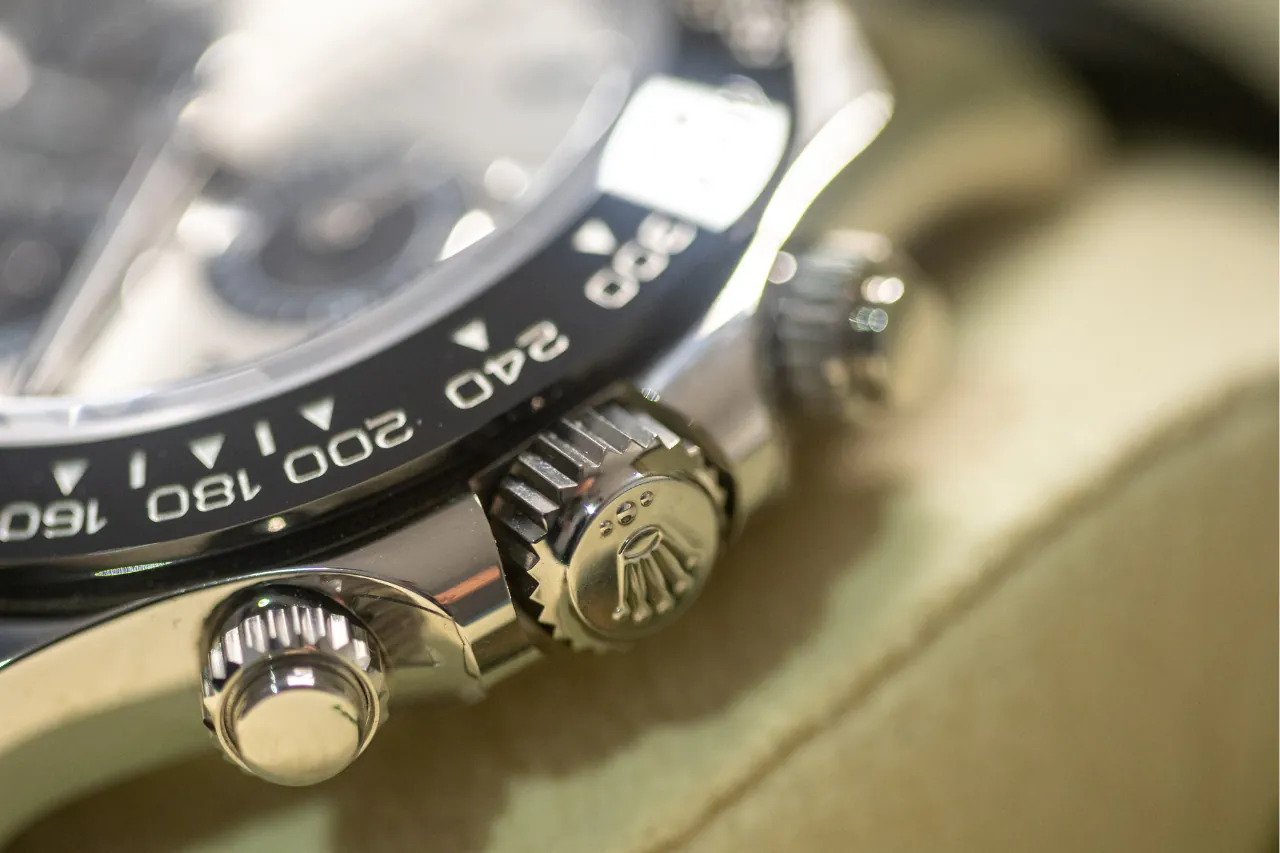
- Crown seals: The seals around the crown help prevent water from entering through the opening used to set the time and date.
- Crystal seals: The gasket between the crystal and the case helps maintain the seal around the watch face.
- Pushers and other openings: On watches with chronograph pushers or additional controls, the corresponding seals help protect these entry points.
- Case and caseback: The case, crystal, and caseback must remain in suitable condition, with their seals properly fitted, to maintain water resistance.
Pressure testing assesses the watch’s ability to resist water entry under controlled conditions. It can help reveal problems that are not apparent from a visual inspection alone.
However, passing a pressure test does not mean a watch is permanently waterproof. The result reflects the watch’s condition and performance under the particular test conditions. Temperature changes, impacts, worn seals, and incorrect handling can affect its water resistance afterward.
Why Is Watch Pressure Testing Important

Water entering a watch can damage its movement, dial, hands, and other internal components. Pressure testing helps identify potential leaks before they lead to more extensive damage.
1. Detecting Worn or Damaged Seals
Gaskets help prevent water from entering through the crown, crystal, caseback, and other openings. Over time, these seals can harden, deform, or crack due to aging, heat, and environmental exposure.
A watch may look perfectly normal even when its seals are no longer effective. If a problem is detected, a watchmaker can determine whether the seals need replacing or other repairs are necessary.
2. Checking Water Resistance After Servicing
Many watch repairs require the case to be opened, including battery replacements, movement repairs, and routine servicing. This can disturb the sealing components, so water resistance should not automatically be assumed to remain unchanged after the work.
Pressure testing after relevant repairs or servicing helps assess whether the watch can still withstand the specified pressure. This is particularly important for watches intended for swimming, diving, or regular exposure to water.
3. Reducing the Risk of Water Damage
A watch’s appearance and age alone cannot confirm its water resistance. Even a well-maintained timepiece may develop leaks as its seals deteriorate.
Pressure testing helps identify potential sealing problems before the watch is exposed to water, rather than after moisture has already reached the movement.
4. Maintaining Water Resistance for Everyday Use
Water-resistance ratings describe a watch’s intended resistance under specified conditions, but they do not guarantee that it will retain the same level of protection throughout its service life.
Regular checks are particularly useful for watches frequently worn in water. For diving watches and other timepieces designed for water-related activities, pressure testing helps assess whether the watch remains suitable for its intended use.
How Does Watch Pressure Testing Work
Pressure testing is carried out with specialized equipment, and the exact procedure depends on the watch’s construction, the testing equipment, and the manufacturer’s recommendations.
Two common methods are dry pressure testing and wet pressure testing.
Dry Pressure Testing
Dry pressure testing checks a watch’s response to changes in air pressure without immersing it in water during the test.
The watch is placed inside a sealed chamber, where the equipment applies pressure or a vacuum. Sensors measure minute changes in the case or crystal that may indicate a leak.
Advantages of dry testing include:
- No direct immersion in water during the test.
- A useful preliminary check for potential leaks.
- Lower risk of introducing moisture during the testing process.
Dry testing is commonly used for routine water-resistance checks. However, results depend on the equipment and watch construction, and a suspected leak may require further investigation.
Wet Pressure Testing
Wet pressure testing uses a controlled pressure chamber and water to help detect leaks.
In one common method, the watch is exposed to pressurized air before being submerged in water as the pressure is released. Escaping air bubbles may reveal a leak around the crown, crystal, caseback, or another sealing point.
The exact procedure varies depending on the equipment. Wet testing can help locate leaks, but it must be performed carefully because water may enter a watch with a significant sealing failure. A watchmaker may therefore use dry testing first to assess whether wet testing is appropriate.
Dry Testing vs Wet Testing

| Feature | Dry Testing | Wet Testing |
| Uses water | No | Yes |
| How it works | Measures changes in case or crystal deformation | Detects escaping air bubbles |
| Main benefit | Checks for potential leaks without immersion | Helps identify the location of a leak |
| Main consideration | May require further investigation to confirm a suspected leak | Can introduce water if the watch has a significant sealing failure |
Neither method is universally better for every watch. The appropriate choice depends on the watch’s condition, construction, and manufacturer recommendations.
What Do Watch Water-Resistance Ratings Mean
Water-resistance ratings indicate the pressure a watch is designed to withstand under specified test conditions. They are commonly expressed in meters, bar, or atmospheres (ATM).
For example, a watch marked 10 bar or 10 ATM has a nominal pressure rating equivalent to approximately 100 meters of water pressure under static conditions. However, this does not guarantee that the watch can be worn to that depth in real-world conditions.
Movement through water, temperature changes, and the condition of the watch’s seals can all affect its water resistance.
Common Water-Resistance Ratings
| Rating | General interpretation |
| 3 bar / 3 ATM / 30m | Generally intended for limited water exposure; suitability depends on the manufacturer’s guidance |
| 5 bar / 5 ATM / 50m | Offers greater water resistance, but swimming suitability depends on the manufacturer |
| 10 bar / 10 ATM / 100m | Often suitable for swimming when explicitly permitted by the manufacturer |
| 20 bar / 20 ATM / 200m | Designed for more demanding water activities, depending on the watch’s specifications |
| Diver’s watch rating | Depends on the stated rating; certified divers’ watches are tested to the ISO 6425 standard |
These are general reference points, not universal activity recommendations. Two watches with the same numerical rating may have different usage instructions depending on their design and certification.
Does 30m Water Resistance Mean a Watch Can Be Worn to 30 Meters
Not necessarily. Like other ratings, 30m describes the pressure a watch is designed to withstand under test conditions, not an automatic safe operating depth. A 30m rating generally indicates limited water resistance, but permitted activities vary by model. Always check the manufacturer’s guidance before exposing the watch to water.
Can a 100m Water-Resistant Watch Be Used for Swimming
Many watches rated to 100m are suitable for swimming when the manufacturer explicitly permits it and the watch remains in good condition.
However, the rating alone does not establish that a particular watch is ready for swimming. Its seals may have deteriorated, the case may have been damaged, or the crown may not be secured correctly.
Pressure testing helps assess the watch’s current water resistance, but it does not replace the manufacturer’s usage guidance.
When Should a Watch Be Pressure Tested
There is no single testing schedule that applies to every watch. The appropriate frequency depends on the manufacturer’s recommendations, the watch’s construction, how it is used, and whether it has undergone repairs.
Several situations warrant particular attention:
1. After a Battery Replacement
Quartz watches often need their casebacks opened during battery replacement. This can disturb the caseback gasket or other seals.
If the watch is intended to remain water-resistant, the sealing components should be inspected and appropriate pressure testing performed after the case has been reassembled.
2. After Watch Servicing or Repairs
Movement servicing, crown repairs, crystal replacement, and caseback work can affect the watch’s sealing system.
After work that involves opening the case or disturbing water-resistant components, appropriate testing helps assess whether the watch has been reassembled correctly. The exact tests required depend on the type of repair and the manufacturer’s procedures.
3. Before Swimming or Diving
If a watch is regularly used for swimming or diving, its water resistance should be checked in line with the manufacturer’s recommendations.
This is particularly important if the watch has not been tested for some time, has experienced an impact, or has shown signs of deterioration. For diving watches, follow the manufacturer’s inspection and servicing requirements, as a general pressure test may not cover every check needed for diving use.
4. After a Significant Impact
A hard knock or drop can damage the crystal, deform parts of the case, affect the crown, or disturb a seal. Even if no visible damage is apparent, the watch’s water resistance may have been affected.
Have the watch assessed before exposing it to water after a significant impact, particularly if it is intended for swimming or diving.
5. When the Watch Shows Signs of Moisture
Condensation beneath the crystal is a warning sign that should not be ignored. It may indicate that moisture has entered the case and requires professional assessment.
If moisture appears inside the watch, stop exposing it to water and arrange an inspection promptly. Do not wait for a scheduled pressure test, because internal components may already be at risk of corrosion.
What Can Cause a Watch to Fail a Pressure Test
A failed pressure test means the watch did not meet the expected criteria under the test conditions. It does not automatically identify the exact component responsible.
The cause must be investigated before the appropriate repair can be determined.
1. Worn or Damaged Gaskets
Gaskets can lose their sealing ability through aging, deformation, chemical exposure, or physical damage.
Because they are often hidden inside the case, their condition may not be obvious during a basic external inspection.
Depending on the findings, a watchmaker may replace the affected gasket and repeat the appropriate tests.
2. A Loose or Improperly Secured Crown
The crown is one of the points where water may enter a watch if the sealing system is compromised.
A crown that is not fully secured as intended, a damaged crown tube, or worn seals around the crown can affect water resistance.
Screw-down crowns must be secured according to the manufacturer’s instructions. However, tightening the crown does not repair damaged seals or guarantee that the watch will pass a pressure test.
3. Damaged Crystal or Caseback
Cracks, chips, deformation, or damage around the crystal and caseback can compromise the seal. The appropriate remedy depends on whether the issue involves the component itself, its gasket, or the surfaces that create the seal.
4. Damage to Pushers or Other Sealed Components
Chronograph pushers, additional crowns, and other case openings create further points that require effective sealing.
If a component is damaged, worn, or incorrectly assembled, it may contribute to a failed test.
The watchmaker needs to assess the specific construction and test results before deciding whether adjustment, replacement, or further repair is required.
5. Previous Repairs or Incorrect Reassembly
A watch can lose water resistance if it has not been reassembled correctly after servicing or repair.
Examples include a pinched gasket, an incorrectly fitted seal, or a component that has not been secured according to the manufacturer’s requirements.
This is one reason pressure testing is valuable after relevant work. Visual inspection alone cannot confirm that every seal performs as intended.
What Happens If a Watch Fails a Pressure Test
A failed test does not necessarily mean the watch has suffered permanent damage. It means the watch should not be exposed to water until the problem has been found and repaired.
The watchmaker first locates the source of the leak, which may require further testing. Depending on the findings, the repair may involve replacing a worn gasket, correcting an assembly issue, or repairing the crown, crystal, or case. Not every failed test requires a full movement service.
After the repair, the watch is tested again to confirm it meets the required criteria. Even once it passes, follow the manufacturer’s guidance on water use, because passing a test does not make a watch suitable for activities it was not designed for.
How to Help Maintain Your Watch’s Water Resistance
Everyday care can help preserve a watch’s water resistance and reduce the risk of moisture entering the case.
- Secure the crown correctly. Follow the manufacturer’s instructions for pushing in or screwing down the crown. Never force it if it feels difficult to operate.
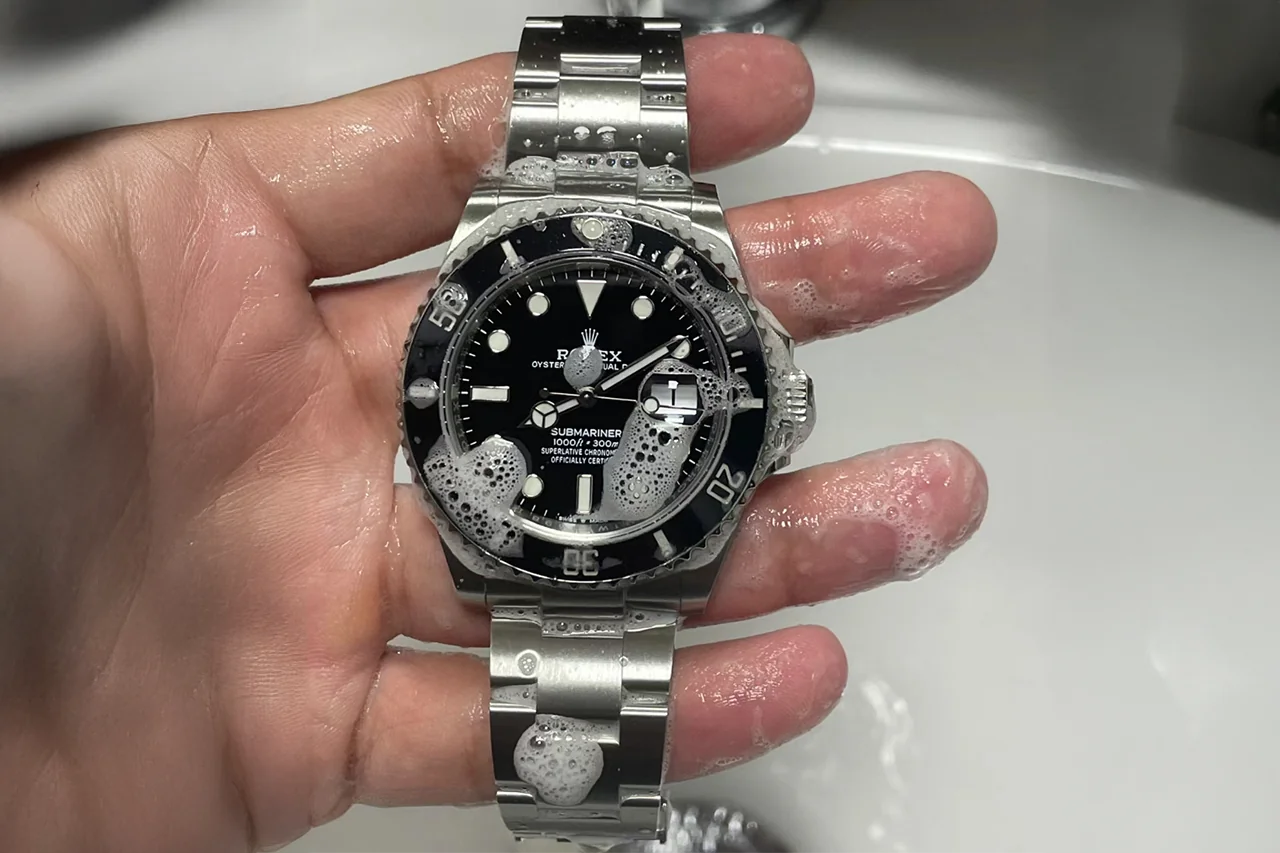
- Avoid hot water, steam, and harsh chemicals. Remove the watch before taking a hot shower or using a sauna unless the manufacturer explicitly permits it. Soap, detergents, and other chemicals may also affect the watch’s seals and exterior components.
- Avoid operating controls when wet or submerged. Do not adjust the crown or operate chronograph pushers underwater unless the manufacturer specifically states that the watch is designed for it.
- Protect the watch from impacts. Knocks and drops can damage the case, crystal, crown, or seals, even when no visible damage appears. After a significant impact, have the watch assessed before exposing it to water.
- Follow recommended maintenance and testing intervals. Check the manufacturer’s schedule for your watch, and arrange a check whenever its water resistance is uncertain.
These precautions help reduce avoidable risks, but they cannot guarantee water resistance.
Frequently Asked Questions
1. How Often Should a Watch Be Pressure Tested?
Many manufacturers recommend checking water resistance about once a year (OMEGA is one example). Testing is also worth arranging after any work that opens the case or a significant impact. Watches regularly worn in water benefit most from staying on this schedule, while the exact interval for a specific watch depends on its brand and model.
2. Does a Watch Pressure Test Guarantee That It Is Waterproof?
A pressure test cannot guarantee that a watch is waterproof, because no watch can keep water out indefinitely. It confirms water resistance only under specified conditions at the time of testing. Seals can still deteriorate later, and real-world use may differ from test conditions.
3. What Should I Do If Condensation Appears Inside My Watch?
Stop exposing the watch to water and arrange a professional inspection promptly. Condensation can indicate moisture inside the case, and delaying assessment may increase the risk of corrosion.
Final Word
Water resistance is not a permanent feature. Seals can deteriorate over time, impacts can affect the case, and opening a watch may disturb its seals. Pressure testing helps assess the watch’s current water resistance and identify potential leaks before water reaches the movement.
The testing method depends on the watch’s construction, condition, and manufacturer requirements. Dry and wet testing are two common approaches, each suited to different situations.
Key Takeaways
- Pressure testing reflects a watch’s current condition, not a permanent guarantee of water resistance.
- Have the watch appropriately tested after repairs or servicing that may affect its water resistance, and after significant impacts.
- A water-resistance rating is based on test conditions, and whether a watch suits swimming or diving depends on the manufacturer’s guidance.
- Condensation under the crystal needs prompt inspection, not a routine test.
A pressure test is one of the simplest ways to check that your watch can still keep water out, especially after a battery replacement, servicing, or an impact. At Watchlab, our Swiss-trained watchmakers can test your watch’s water resistance, trace the source of any leak, and advise whether seals or other components need attention.