Guide
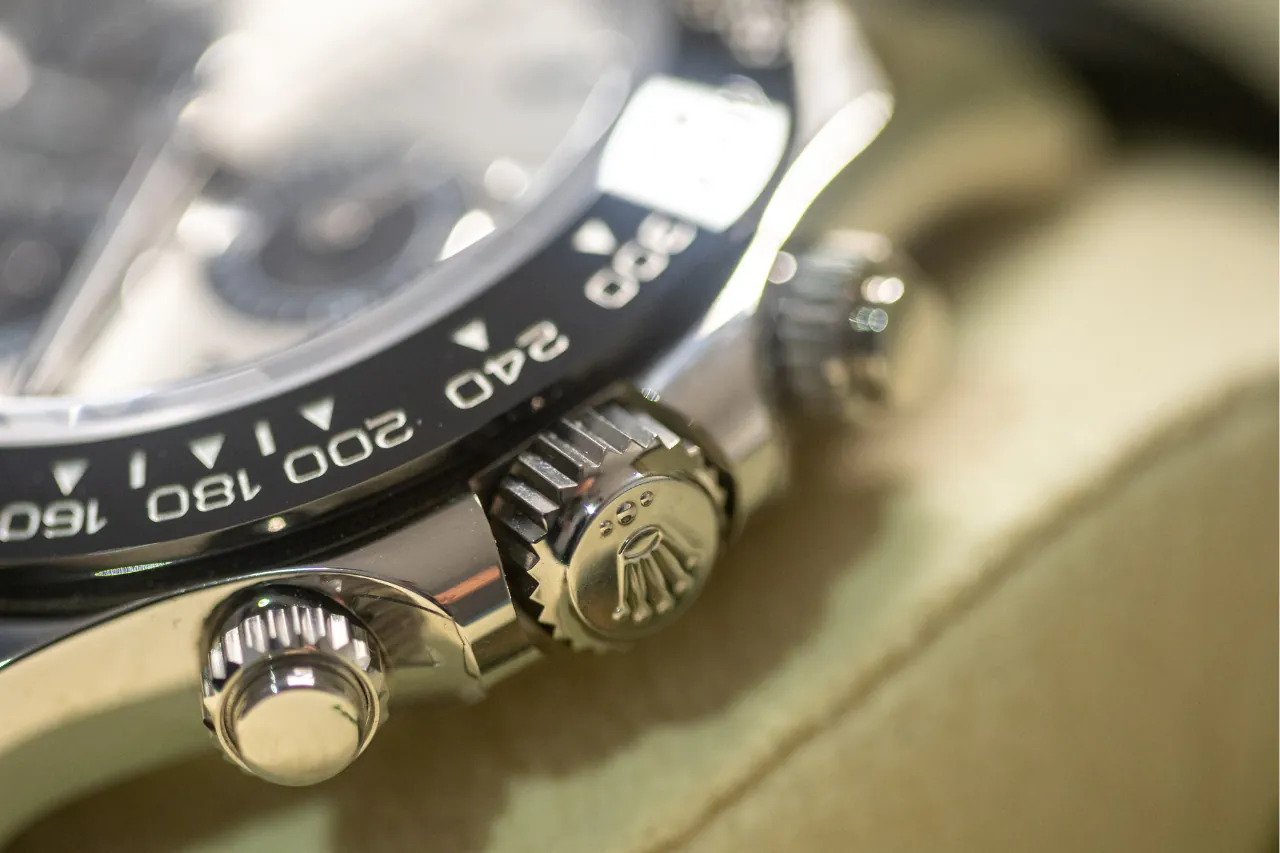
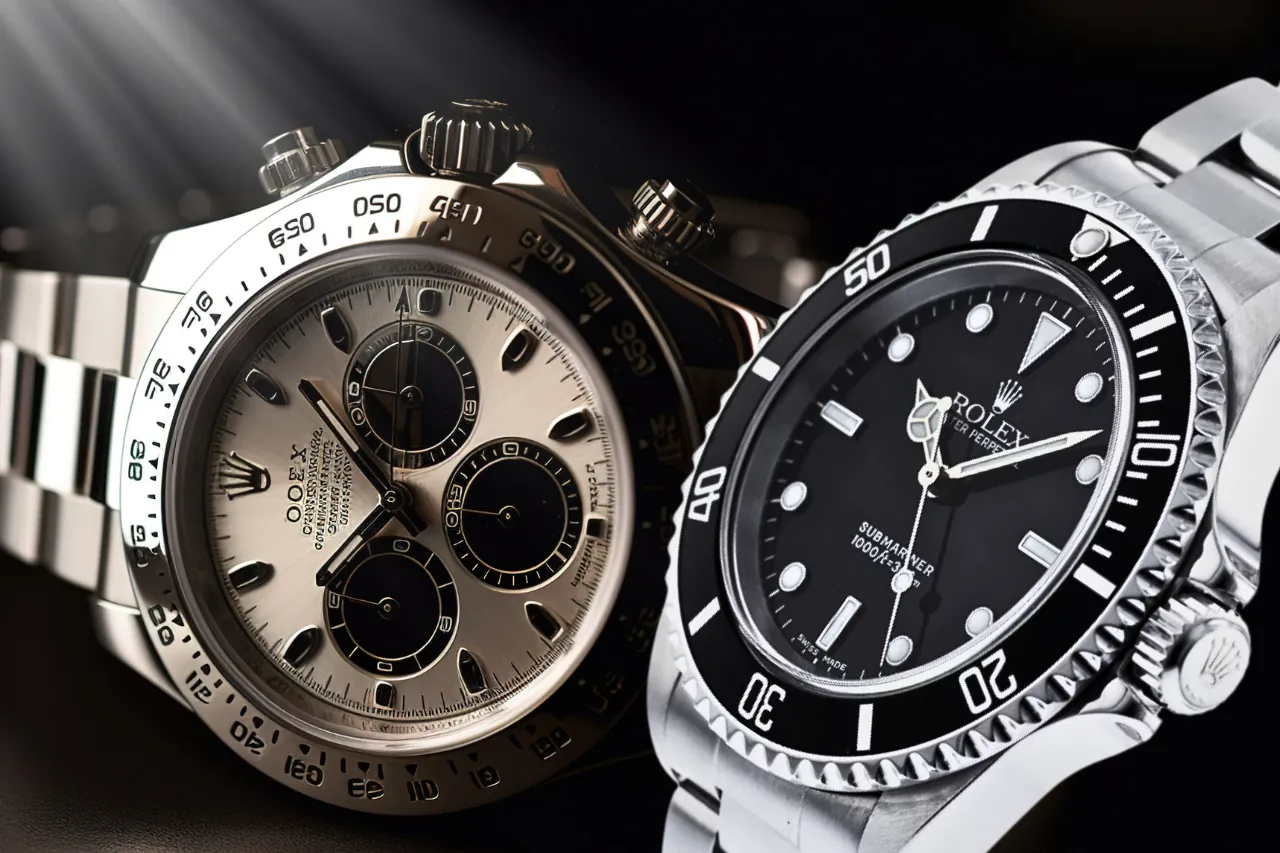
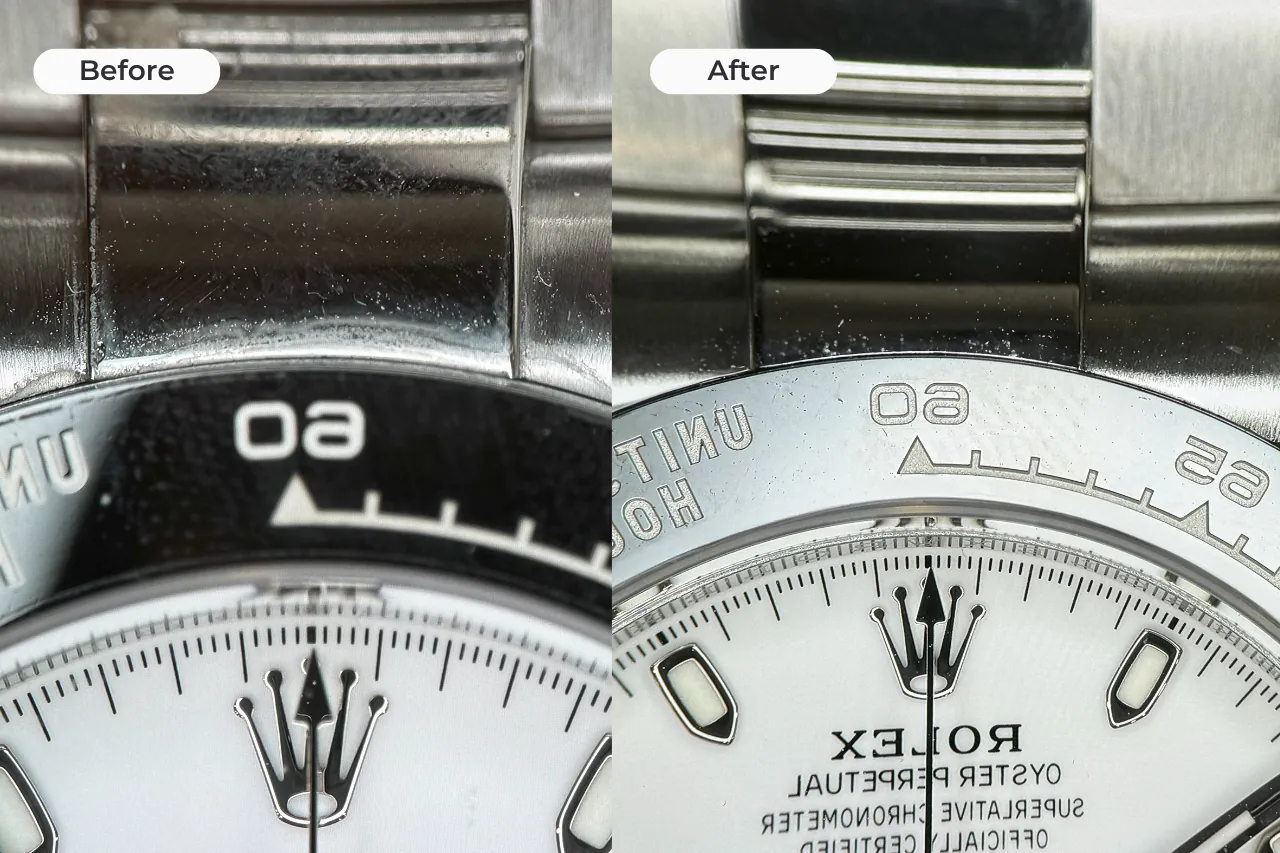
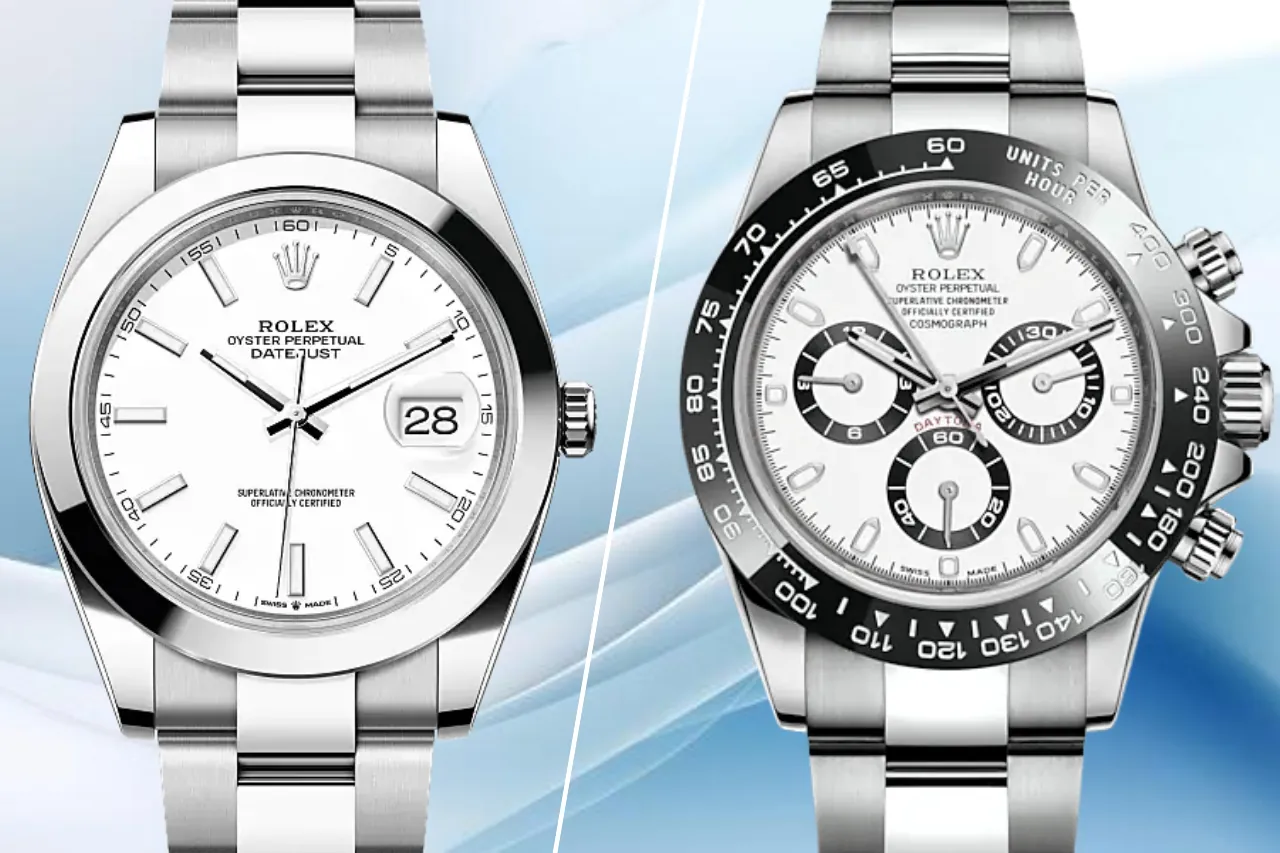
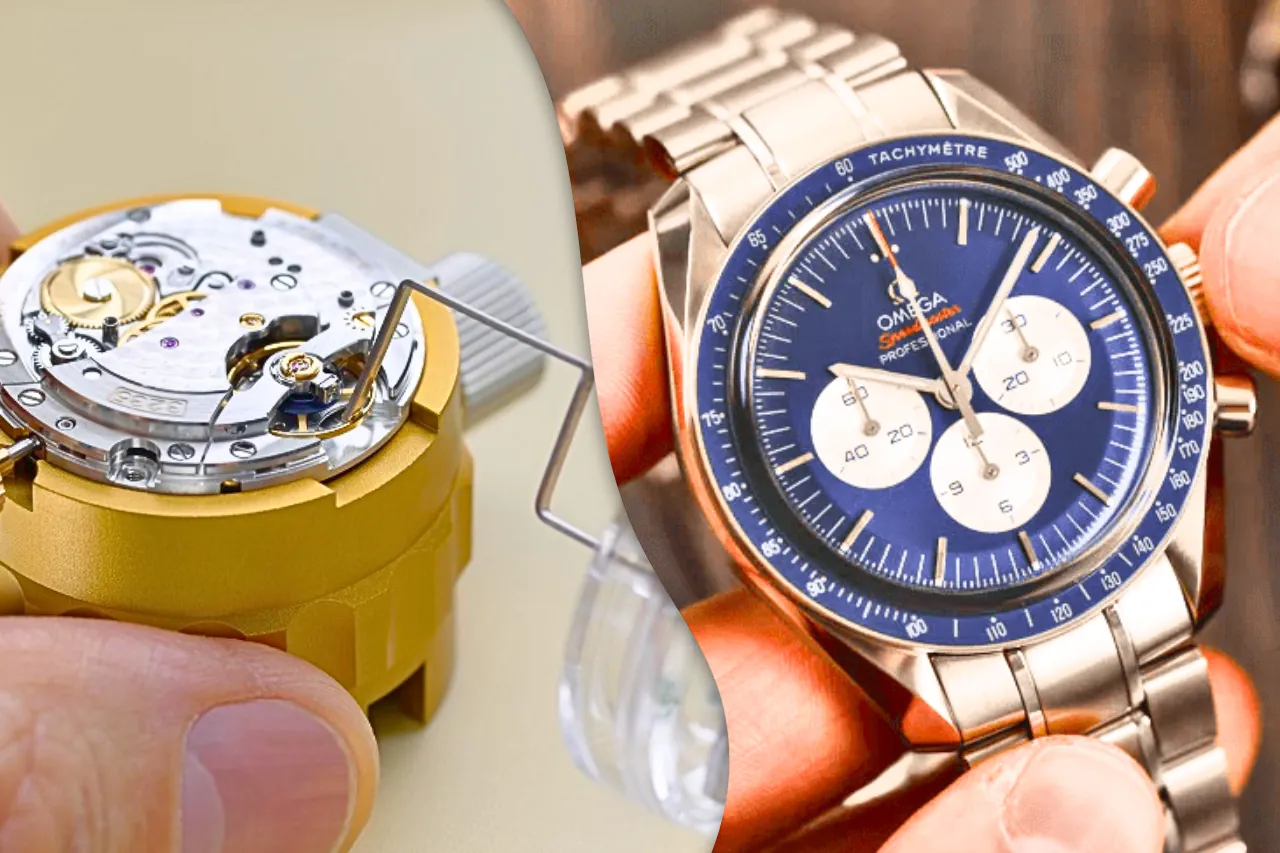
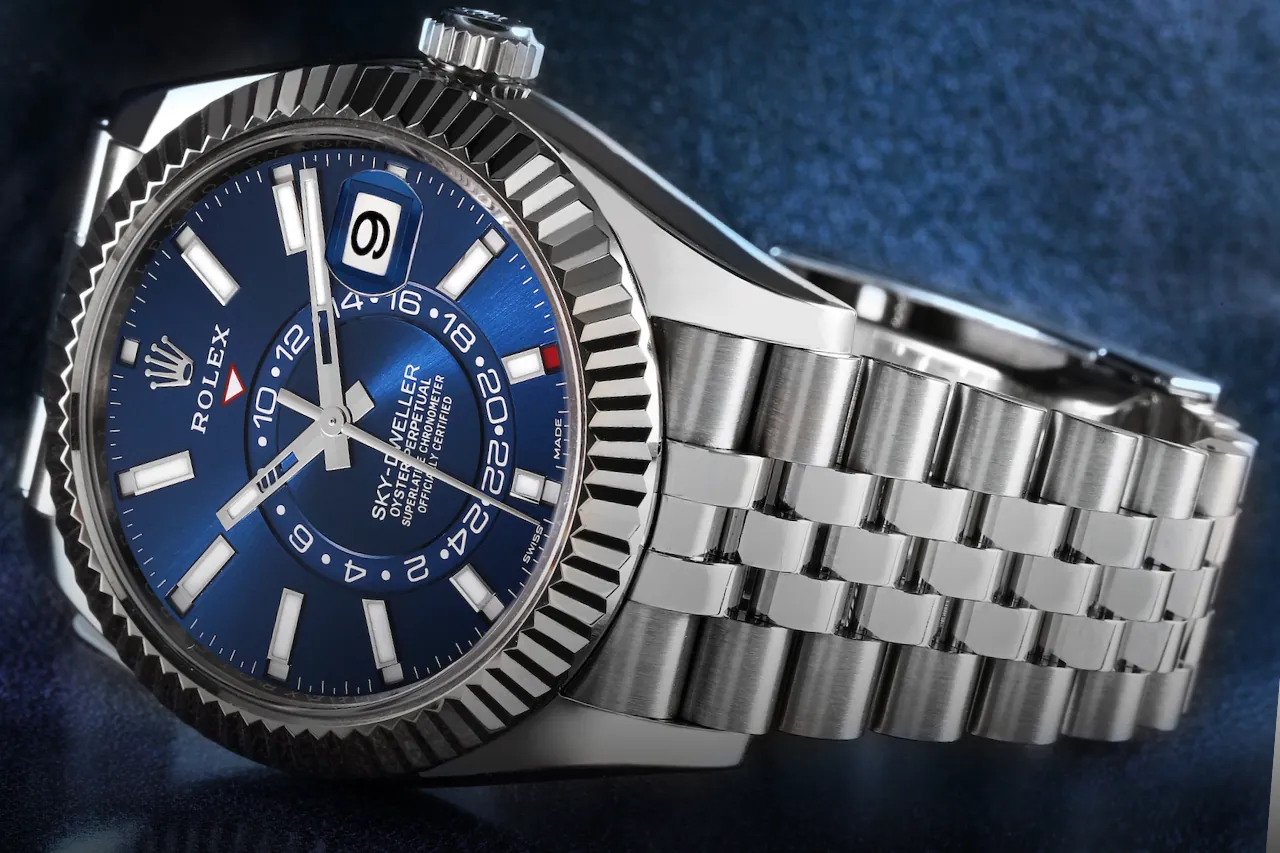
Look at a Rolex Daytona, an Omega Speedmaster, or many racing-inspired chronographs, and you’ll often find a ring of numbers running around the bezel, generally descending towards 60. Most owners know it’s called a tachymeter, but many assume it somehow reads speed directly from the watch. It doesn’t, not on its own.
A tachymeter is a simple calculation tool. It uses the relationship between time and distance to calculate average speed, so the distance being measured must be known. Without a known distance, the scale has nothing meaningful to calculate.
This guide explains what a tachymeter is, the formula behind it, how to use one correctly, and some of the common misconceptions that can confuse new watch owners.
What Is a Tachymeter
A tachymeter is a scale, typically found on a watch’s bezel or occasionally printed around the dial’s outer edge, that converts elapsed time into average speed. It’s designed to work with a chronograph, the watch’s stopwatch function. The chronograph records how long an event takes, while the tachymeter scale translates that elapsed time into a speed reading.

A tachymeter calculates average speed over a known distance, not instantaneous speed at any single moment. The distance must be known before the timing begins for the resulting reading to have meaning.
A conventional tachymeter scale is calibrated so that its reading represents the speed, in units per hour, needed to cover one unit of distance in the measured time. The actual unit of speed depends on the distance being measured.
Is a Tachymeter a Watch Complication
A tachymeter is often discussed alongside watch complications, but the scale itself is not a mechanical complication in the same sense as a perpetual calendar or minute repeater. It is a graduated scale that works with the chronograph function.
The chronograph is the mechanical function that allows the wearer to start, stop and reset elapsed-time measurement. The tachymeter scale provides a quick way to interpret that elapsed time as average speed.
This is why tachymeters are most commonly found on chronograph watches.
A Brief History of the Tachymeter
Tachymeter scales originally appeared on the dial rather than the bezel. That changed in 1957, when the Omega Speedmaster became one of the first chronographs to move the scale to the bezel for better legibility, a layout the Rolex Daytona also adopted when it launched in 1963. Most modern chronographs with a tachymeter now follow this bezel-based layout, though some, including certain vintage and reissue models, still place it on the dial.
The Tachymeter Formula
The scale is based on one simple relationship: there are 3,600 seconds in an hour.
For a known distance of one unit, the formula is:
T = 3,600 ÷ t
Where:
- T is the tachymeter reading
- t is the elapsed time in seconds
If an event takes 35 seconds to complete over a known distance, for example:
3,600 ÷ 35 = approximately 102.9
The tachymeter scale would therefore read approximately 103.
If the measured distance is one kilometre, this corresponds to an average speed of approximately 103 kilometres per hour; if it is one mile, approximately 103 miles per hour. The unit always follows the distance being measured.
For example:
| Elapsed Time | Tachymeter Reading | Average Speed |
| 10 seconds | 360 | 360 units per hour |
| 20 seconds | 180 | 180 units per hour |
| 30 seconds | 120 | 120 units per hour |
| 45 seconds | 80 | 80 units per hour |
| 60 seconds | 60 | 60 units per hour |
A tachymeter can also be used to calculate a production rate rather than physical speed. For example, if one item takes 20 seconds to complete, the tachymeter reading is 180, indicating a rate of 180 items per hour. The same principle applies when timing repeated rotations or other regular events.
The shorter the elapsed time, the higher the corresponding speed. This is why tachymeter scales generally descend towards 60, with the higher values becoming increasingly compressed towards the shorter elapsed times.
The exact range and layout can vary between watches, with some specialised designs using extended scales or different configurations. In practice, a conventional scale typically runs from around 60 at the slow end up to roughly 400 at the fast end. Very short elapsed times, under about 10 seconds, become hard to read accurately, because the markings are so tightly compressed at that end of the scale.
How Does a Tachymeter Work in Practice
Learning how to use a tachymeter comes down to four basic steps.
Step 1: Identify a Known Distance
Choose a measured distance before starting the chronograph. This might be one kilometre on a marked road, a known lap length on a track, or another fixed distance.
Step 2: Start the Chronograph
Start the chronograph as the object or vehicle reaches the beginning of the measured distance.
The chronograph seconds hand begins recording the elapsed time.
Step 3: Stop the Chronograph
Stop the chronograph when the measured distance has been covered.
The chronograph seconds hand now shows the elapsed time recorded for the journey.
Step 4: Read the Tachymeter Scale
Read the tachymeter value where the chronograph seconds hand has stopped.
That value represents the average speed over the measured distance, expressed in units per hour.
For example, if a car takes 30 seconds to cover a measured one-mile stretch, the chronograph seconds hand will point to 120 on the tachymeter scale.
The result is an average speed of 120 miles per hour over that measured distance.
The distance needs to be accurately known for this calculation to be meaningful. A reading taken over a guessed or approximate distance will only be as reliable as that measurement.
Which Watches Commonly Feature a Tachymeter
Tachymeters are most commonly found on chronograph watches, particularly sports and racing-inspired models. Some of the best-known examples include the Rolex Cosmograph Daytona, Omega Speedmaster and TAG Heuer Carrera.
| Watch | Tachymeter Placement | Notable Detail |
| Rolex Cosmograph Daytona | Fixed outer bezel | A signature feature of the Daytona’s chronograph design |
| Omega Speedmaster | Fixed outer bezel | A signature feature of the Speedmaster’s classic chronograph layout |
| TAG Heuer Carrera | Bezel or dial | Commonly paired with Carrera chronographs and their racing-focused design |
| Vintage chronographs | Outer dial | Tachymeter scales were commonly incorporated into the dial layout of older chronographs |
| Breitling chronographs | Bezel or dial | Selected chronograph models combine tachymeter scales with other timing functions |
| Zenith chronographs | Bezel or dial | Selected models use the tachymeter as part of their technical chronograph design |
The placement and design can vary between watches, but the tachymeter works with the chronograph to calculate average speed over a known distance.
How Accurate Is a Tachymeter Reading
A tachymeter reading depends on the accuracy of the chronograph measuring the elapsed time. The scale itself is a fixed mathematical reference. It does not measure speed independently.
Small differences can also come from how the chronograph is operated. Starting or stopping the chronograph slightly before or after the exact measurement point can affect the result, particularly when timing short intervals.
If the chronograph seconds hand does not start, stop or return to zero correctly, the tachymeter reading may also be unreliable. In this case, the chronograph mechanism should be checked rather than assuming there is a problem with the tachymeter scale.
Can a Tachymeter Be Used on Any Chronograph
No. A tachymeter is an additional scale found on some chronograph watches, not a standard feature of every chronograph.
A chronograph provides the stopwatch function needed to measure elapsed time, while the tachymeter scale converts that measurement into average speed over a known distance. Some chronographs instead feature other scales, such as a telemeter or pulsometer, while others have no specialised scale at all.
Not every chronograph has a tachymeter; it depends on the watch’s design and intended use. On racing-inspired chronographs such as the Rolex Cosmograph Daytona and Omega Speedmaster, it has become a particularly recognisable feature.
Common Tachymeter Misconceptions
1. Does a Tachymeter Show Your Current Speed?
No. A tachymeter calculates average speed over a known distance based on the time recorded by the chronograph. It does not continuously monitor speed or show your speed at a particular moment.
2. Can a Tachymeter Measure Any Speed, No Matter How Slow?
Not directly with a conventional scale. Most standard tachymeter scales provide direct readings for timing intervals of up to 60 seconds. If the event takes longer, the speed usually needs to be calculated manually or measured over a shorter known distance.
Some watches use specialised or extended tachymeter scales, so the usable range can vary between models.
3. Does the Tachymeter Need to Know What Unit You’re Measuring In?
No. The scale is based on the relationship between time and distance, so the resulting speed uses the same distance unit being measured.
For example, a reading of 120 over one kilometre represents 120 km/h, while the same reading over one mile represents 120 mph.
4. Is a Tachymeter Bezel the Same as a Rotating Dive Bezel?
No. They serve different purposes. A dive bezel is rotated to track elapsed time, while a tachymeter scale is typically fixed on the bezel or printed on the dial and works with the chronograph to calculate average speed.
What Is the Difference Between a Tachymeter, Telemeter and Pulsometer
Chronographs can feature several different scales, and they can look similar at first glance. The key difference is what each scale is designed to calculate.
| Scale | What It Measures | Typical Use |
| Tachymeter | Average speed over a known distance | Motor racing and other speed calculations |
| Telemeter | Approximate distance to an event based on the time between seeing and hearing it | Lightning and thunder |
| Pulsometer | Heart rate based on counting a set number of beats | Medical and fitness-related timing |
Tachymeter
A tachymeter calculates average speed based on elapsed time and a known distance. It is the scale most closely associated with motorsport-inspired chronographs.
Telemeter
A telemeter estimates distance by using the time difference between seeing an event and hearing its sound, taking advantage of the much faster speed of light compared with sound.
For example, you can start the chronograph when you see lightning and stop it when you hear the thunder. The telemeter scale then provides an approximate distance to the storm.
Pulsometer
A pulsometer works differently. It allows the wearer to count a specified number of heartbeats and then read the corresponding heart rate from the scale.
Each scale has a different purpose, even though they can appear on similar chronograph watches.
Is a Tachymeter Still Useful Today
A tachymeter is less practical today than modern GPS systems and digital speedometers, but it remains a functional feature on mechanical chronographs.
For watch owners, its appeal is also about the design. On watches such as the Rolex Cosmograph Daytona and Omega Speedmaster, the tachymeter is an important part of the chronograph’s identity and motorsport-inspired character.
What Should You Check If Your Tachymeter Reading Looks Off
If your watch’s tachymeter reading seems incorrect, check the following:
- Chronograph: Make sure it starts, stops and resets correctly.
- Seconds hand: Check that it returns precisely to zero.
- Pushers: Make sure they operate smoothly and consistently.
- Tachymeter scale: Check that the scale and chronograph hand appear properly aligned.
- Timing: Make sure the chronograph was started and stopped at the correct points.
If these functions are not operating correctly, the issue may be with the chronograph movement rather than the tachymeter scale itself. A professional inspection can help identify the cause.
Signs Your Chronograph Movement May Need Servicing
Since the tachymeter relies on the chronograph to measure elapsed time, problems with the chronograph can affect the reliability of the resulting calculation.
Signs that a chronograph may need professional inspection include:
- The chronograph seconds hand does not return precisely to zero
- The pushers feel unusually stiff or require noticeably more pressure
- The chronograph hand skips or stutters
- There is a noticeable delay between pressing the start pusher and the hand beginning to move
- The chronograph does not stop or reset consistently
- Timed intervals no longer match a reliable reference
These symptoms do not confirm a specific fault on their own, but they are good reasons to have the chronograph mechanism inspected.
Chronograph components experience mechanical wear over time, and an overdue service can affect the operation and timing of the mechanism.
FAQs
1. What is a tachymeter used for?
A tachymeter is used to convert elapsed time into average speed over a known distance. It works alongside a watch’s chronograph function.
2. How do you read a tachymeter on a watch?
Start the chronograph at the beginning of a known distance, stop it when the distance has been covered, and read the value where the chronograph seconds hand has stopped on the tachymeter scale.
3. Can a tachymeter measure distance instead of speed?
Not as its primary function. A tachymeter is designed to calculate average speed over a known distance.
If speed is already known and constant, the underlying relationship between speed, time and distance can be used to calculate distance, but this requires a separate calculation rather than a direct tachymeter reading.
4. Is a tachymeter the same as a telemeter?
No. A tachymeter calculates average speed over a known distance, while a telemeter estimates the distance to an event based on the time between seeing and hearing it.
5. Why do tachymeter scales stop at 60?
On a conventional scale, 60 seconds corresponds to 60 units per hour for one unit of distance. Beyond 60 seconds, the standard scale normally cannot provide a direct reading, so the calculation needs to be performed manually or adapted to a shorter known distance.
6. Can a tachymeter be used for walking or running speed?
A standard tachymeter is generally not suitable for ordinary walking or running speeds because they are usually below the scale’s conventional range. A specialised scale may offer a different range, but the typical tachymeter is designed for higher speeds.
7. Does every chronograph have a tachymeter?
No. A tachymeter is an additional scale that many, but not all, chronographs include. Other chronographs may use a telemeter, pulsometer or no specialised scale at all.
Final Word
A tachymeter is a graduated scale that converts elapsed time into average speed, provided the distance being measured is known.
It does not replace a modern speedometer or GPS for everyday use, but it remains a distinctive link to the chronograph’s motorsport and technical timing roots.
Understanding the scale also gives you a better sense of how a mechanical chronograph can be used to measure speed. From the Rolex Cosmograph Daytona to the Omega Speedmaster, the tachymeter remains an important part of the identity of some of the world’s best-known chronographs, combining a practical calculation with a design feature that has become closely associated with mechanical chronographs.
Key Takeaways
- A tachymeter converts elapsed time into average speed over a known distance and works alongside a chronograph.
- The tachymeter does not depend on a specific distance unit; the resulting speed uses the same distance unit used for the measurement.
- A conventional tachymeter generally provides direct readings for events lasting up to 60 seconds, while longer intervals require an adjusted or manual calculation.
- If a tachymeter reading appears incorrect, check the known distance, chronograph timing, hand alignment and chronograph operation before assuming the scale itself is at fault.
Because the tachymeter relies on the chronograph, symptoms like a seconds hand that won’t return to zero, stiff pushers or a stuttering hand point to the movement rather than the scale, and are worth having checked. Contact Watchlab to arrange a professional assessment.