Guide
Most Rolex watches have solid case backs, so the movement isn’t visible from the outside. For owners and buyers, that can make it difficult to know exactly what movement is inside the watch.
The answer depends on which Rolex you’re looking at. A modern Datejust, a vintage Submariner from the 1970s, and an Oysterquartz from the 1980s all use different movements from different eras. Even among current-production watches, Rolex fits different calibers depending on the model, case size, and functions.
This guide gives you a model-by-model breakdown of which caliber powers each current Rolex, how those calibers differ, whether Rolex makes its own movements, whether they’re automatic, manual-wind, or quartz, how to identify the movement in your own watch, and why the caliber matters for servicing.
What Is a Rolex Caliber
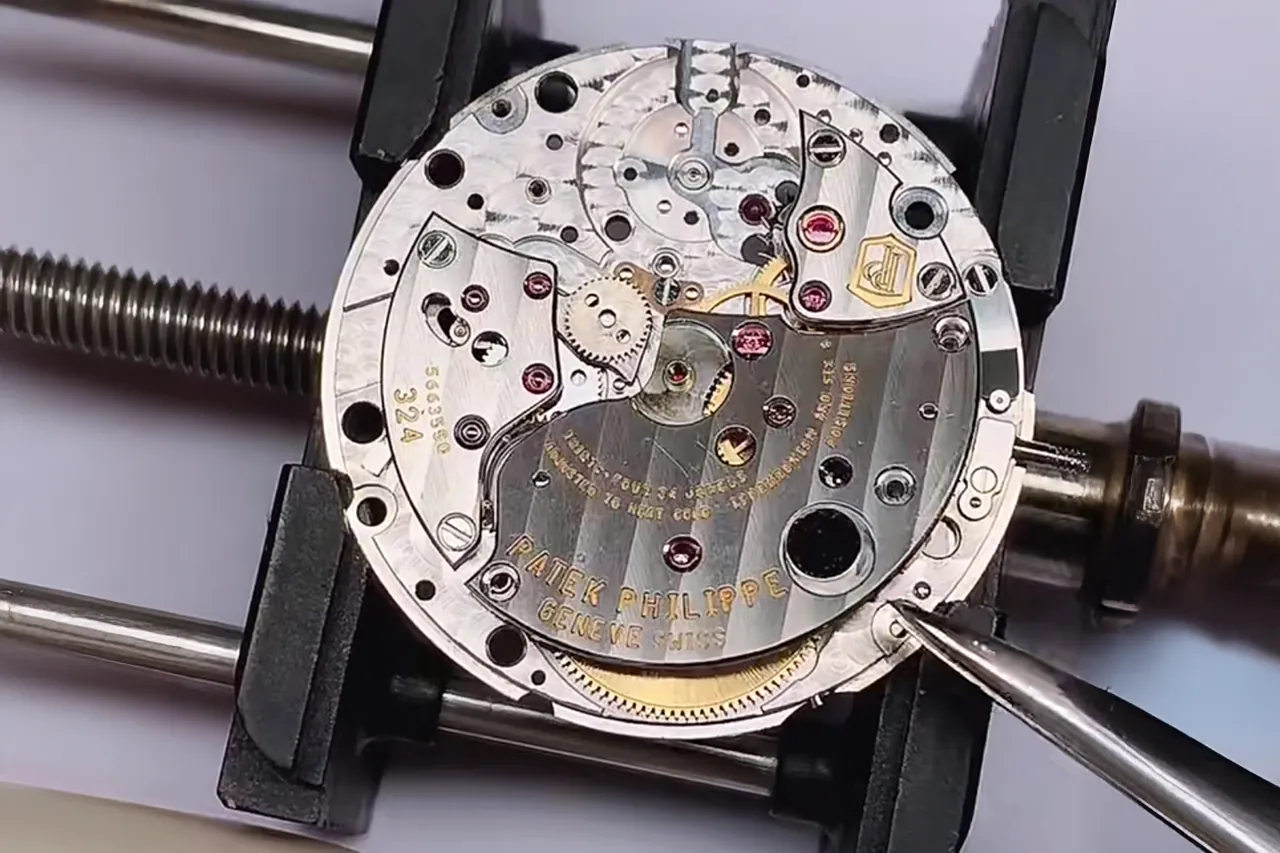
“Caliber” refers to a specific movement design, identified by a reference number such as 3235 or 4131. Each caliber has its own components, specifications, and power reserve, which help distinguish one movement from another.
When someone asks what movement a Rolex uses, they’re usually asking which caliber is inside it. The terms are often used interchangeably in everyday watch discussions, including throughout this guide.
What Movement Does Rolex Use

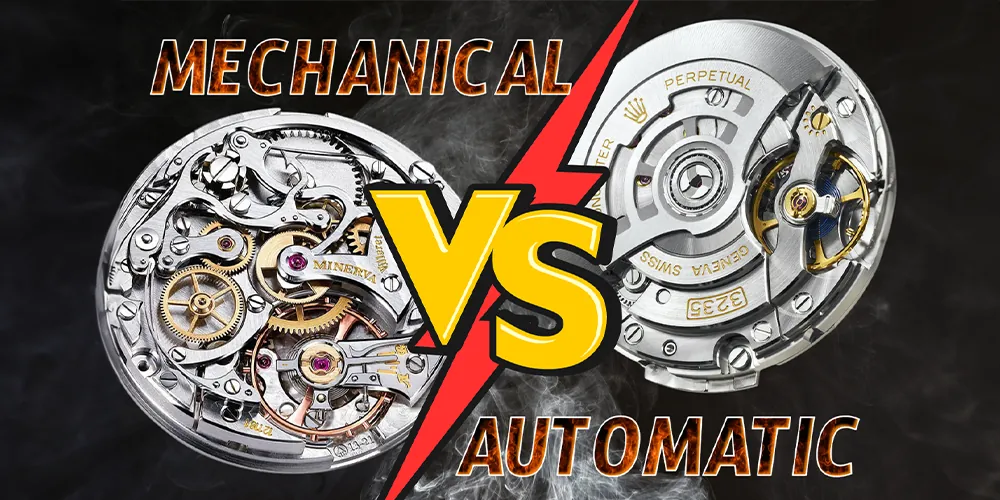
Modern Rolex watches use automatic mechanical movements. These movements are powered by a mainspring and wound automatically by a rotor as you wear the watch. Rolex refers to this as its Perpetual self-winding system.
Rolex has also produced manual-wind and quartz movements throughout its history. Manual-wind movements require the wearer to wind the watch by turning the crown, while quartz movements use a battery and electronic oscillator to keep time.
Today, Rolex’s current collection is entirely mechanical and self-winding. The exact movement inside each watch is identified by its caliber number, such as caliber 3230, 3235, 3285, or 4131.
Does Rolex Make Its Own Movements
Yes. Every watch currently in production uses a movement developed and manufactured by Rolex. Rolex designs and manufactures its own movements rather than sourcing them from an outside supplier such as ETA or Sellita, which some other well-known Swiss brands do use.
Rolex once sourced movements from Aegler, a Swiss company that supplied movements exclusively to Rolex. Aegler remained a separate company until Rolex acquired it in 2004.
The Cosmograph Daytona was an exception. Its chronograph movement came from outside Rolex entirely: from 1988, the Daytona used caliber 4030, based on a modified Zenith El Primero movement, until Rolex introduced its own chronograph caliber, the 4130, in 2000.
Which Movement Does Each Rolex Model Use
The table below covers Rolex’s current production models and the caliber that powers each one, based on Rolex’s own published specifications.
| Rolex Collection | Current Caliber(s) | What It Does |
| Oyster Perpetual | 2232 / 3230 | Time only |
| Datejust | 2236 / 3235 | Time + date |
| Submariner | 3230 / 3235 | Time only / date |
| GMT-Master II / Explorer II | 3285 | Second time zone |
| Day-Date | 3255 | Day + date |
| Cosmograph Daytona | 4131 | Chronograph |
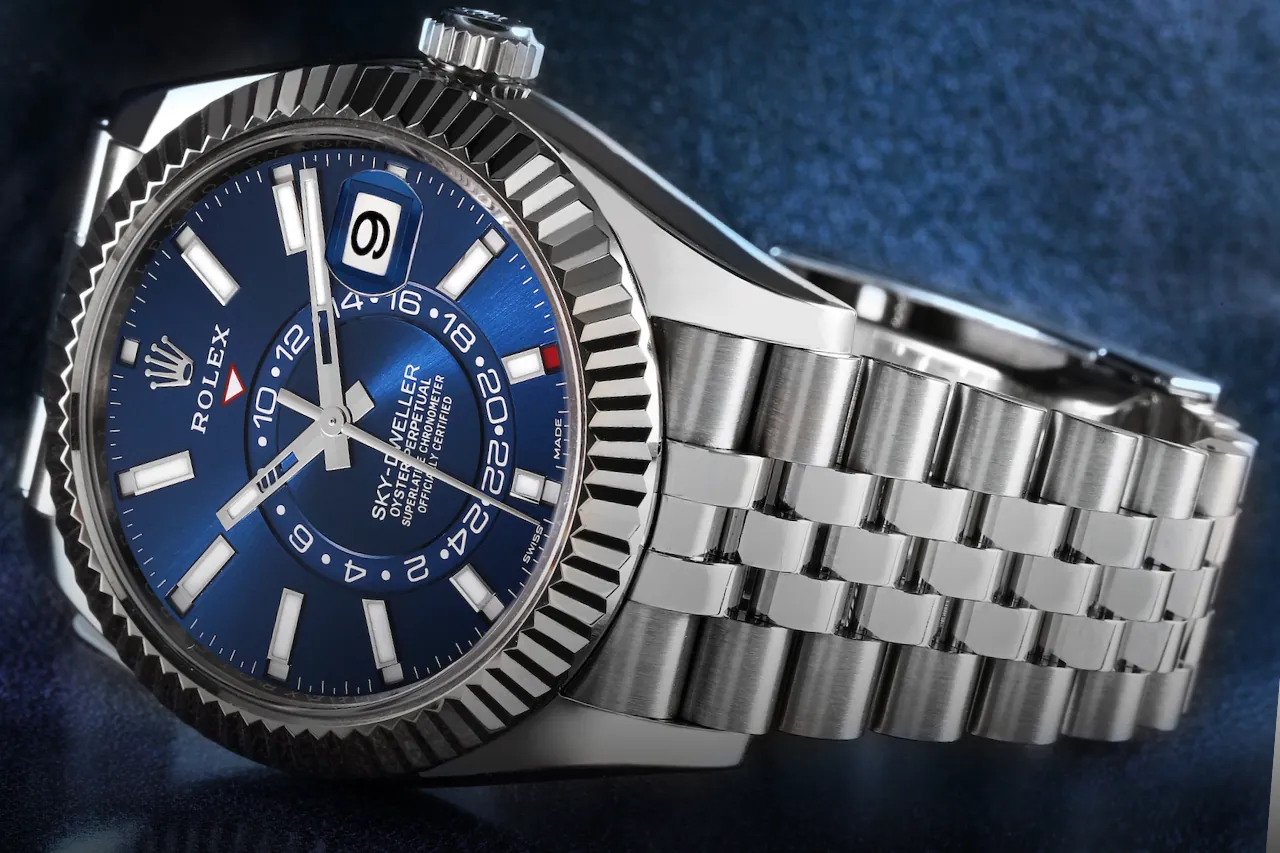
| Sky-Dweller | 9002 | Annual calendar + second time zone |
| Perpetual 1908 | 7140 | Time + small seconds |
| Land-Dweller | 7135 | Time + date |
Note on the Land-Dweller: both the 36mm and 40mm versions share the same caliber. Rolex’s own newsroom materials confirm caliber 7135 powers both sizes; there isn’t a separate “7132” caliber for the smaller case, despite that claim circulating in some places.
What’s the Difference Between the Main Caliber Families
| Caliber Family | Built For | Key Distinction |
| 32xx (3230 / 3235) | Three-hand and date watches | Same movement generation, with the 3235 incorporating a date mechanism |
| 22xx (2232 / 2236) | Compact case sizes | Designed for Rolex’s smaller case sizes |
| 3255 / 9002 | Calendar complications | Day-Date’s simultaneous day-and-date vs Sky-Dweller’s annual calendar |
| 3285 | Second time zone | Runs the GMT-Master II and Explorer II |
| 4131 | Chronograph | Purpose-built for the Daytona |
| 7140 / 7135 | Newest generation | The 7135 adds the new Dynapulse escapement |
The differences between these families aren’t just about complications. Rolex also develops different movements for different case sizes and technical requirements, which is why a smaller watch can use a distinct caliber rather than a scaled-down version of a larger one.
Each caliber is designed for a specific model and set of functions, so the right movement depends on the Rolex you’re looking at.
Which Rolex Movement Is Most Common
The 32xx family is one of the most widely used caliber groups in Rolex’s current lineup, powering a range of three-hand and date models. Caliber 3235 appears in the Datejust, Submariner Date, Sea-Dweller, and larger Yacht-Master models. It also offers approximately 70 hours of power reserve. Its no-date sibling, the 3230, extends that same family’s reach further, across the Oyster Perpetual, Air-King, Explorer, and no-date Submariner.
The number of models using a caliber doesn’t tell us how many watches Rolex has actually produced with it. Rolex doesn’t publish production figures by caliber, so any claim about total units made should be treated as speculation rather than fact.
Key Technologies Behind Rolex Calibers
Rolex uses several technologies across its current calibers.
Chronergy Escapement
Introduced in 2015, Rolex’s Chronergy escapement is designed to improve energy efficiency while providing greater resistance to magnetic fields. Rolex states that the system improves the efficiency of the escapement by approximately 15% compared with a conventional Swiss lever escapement.
Parachrom and Syloxi Hairsprings
The Parachrom hairspring, recognizable by its blue color, is designed to resist magnetism, shocks, and temperature changes better than a standard hairspring. The silicon Syloxi hairspring does a similar job in the smaller 2232, 2236, and 7140 calibers.
Paraflex Shock Absorbers
Paraflex is Rolex’s own shock-absorption system, designed to improve the movement’s resistance to shocks.
Dynapulse Escapement
The Land-Dweller’s caliber 7135 introduced a newer escapement altogether, called Dynapulse, alongside the existing Chronergy design rather than replacing it across the board. Dynapulse uses a different architecture to transfer energy to the balance wheel, and it allows the 7135 to run at a higher frequency of 5 Hz (36,000 vibrations per hour) compared with the 4 Hz used across most other current Rolex calibers. The higher frequency can contribute to more consistent short-term timekeeping, although overall accuracy still depends on the movement’s regulation and how the watch is worn.
Magnetism can also affect a mechanical watch’s accuracy by disturbing the hairspring’s oscillation. Parachrom, Syloxi, and the nickel-phosphorus components used in Chronergy are designed to improve resistance to magnetic fields. This resistance is not absolute, so a Rolex that suddenly starts gaining or losing noticeable time should still be checked.
These technologies help explain how Rolex’s different calibers are designed and why some movements use different technical solutions.
Older Rolex Calibers You Might Still Encounter
If your Rolex is older, it may use one of these earlier calibers rather than a current-generation movement:
| Caliber | Approx. Era | Role in Rolex History |
| 1570 / 1575 | Late 1950s to 1980s | Vintage-era movements found in classic references such as the Submariner 5513 and Datejust 1601 |
| 3135 | 1988 to around 2018 | Predecessor to the 3235, found in older Submariner, Datejust, Sea-Dweller, and Yacht-Master references |
| 3130 | 2001 to around 2020 | The no-date equivalent of the 3135, predecessor to today’s 3230 |
| 3155 / 3156 | Late 1980s to 2015 | Earlier Day-Date movements, predecessors to the 3255 |
| 3185 / 3186 | 1999 to 2018 | Earlier GMT-Master II movements, predecessors to the 3285 |
| 2235 | 1999 to around 2014 | Predecessor to the 2236, used in older Lady-Datejust and Datejust 31 models |
An older caliber isn’t necessarily unreliable just because of its age. A well-maintained 3135 can still perform reliably despite its age. Older calibers also predate technologies such as Chronergy and Paraflex, so condition, originality, and service history can matter more than the caliber number alone when assessing an older Rolex. The Caliber 3135 offers approximately 48 hours of power reserve, compared with approximately 70 hours for the newer Caliber 3235.
Automatic, Manual-Wind, and Quartz Rolex Movements
Every current Rolex is automatic, meaning it winds itself through the Perpetual rotor rather than needing to be wound by hand. This wasn’t always the case.

Rolex produced manual-wind movements for much of the twentieth century, including many vintage Oyster and Precision references, and early Cosmograph Daytona models before Rolex’s first automatic Daytona arrived in 1988. Rolex’s Cellini line, which included manual-wind models, was discontinued in 2023. The Perpetual 1908 was introduced as its automatic dress-watch successor.
Rolex has also made quartz movements. The Oysterquartz, used in select Datejust and Day-Date models from the late 1970s into the early 2000s, is no longer in production, and every current Rolex watch is mechanical rather than quartz.
How to Identify Which Movement Is in Your Rolex
The most reliable way to confirm which caliber is in your own watch is to match your specific model and reference number against Rolex’s published specifications, or against the model table earlier in this guide. The exact caliber can vary even within the same model family, depending on when your watch was made.
A couple of examples make this concrete:
- A Submariner Date (reference 126610) runs caliber 3235
- The no-date Submariner (reference 124060) runs caliber 3230, the same generation of movement without the date module
Two watches that look almost identical can still house different calibers, which is why matching the watch to its reference number is more reliable than identifying the movement from the outside. This matters even more with a pre-owned or vintage Rolex. Watches can be serviced or repaired over their lifetime, and components, or occasionally the movement itself, may have been replaced. The reference number alone isn’t always a guarantee. A watchmaker can confirm the actual movement during an inspection rather than trying to identify it from the case back.
When assessing a pre-owned or vintage Rolex, Watchlab does not rely on the model name alone to identify the movement. The reference, production period, movement markings, and service history are all considered when determining which caliber is fitted.
Why the Caliber Matters for Servicing
Like any mechanical movement, a Rolex caliber relies on lubrication, precise regulation, and clean, well-adjusted components to keep performing as intended. Over years of wear, lubricants age and components experience ordinary wear, so accuracy can drift even in a movement that performed well when new. Regular servicing helps maintain the movement’s performance over time, although the appropriate service interval depends on the watch’s condition, usage, and operating environment.
The specific caliber also matters when servicing a Rolex. Different Rolex movement families have different designs and components, so a watchmaker needs to understand the movement they are working on. For example, servicing a 3235 or 2236 is different from working on the chronograph mechanism in a 4131. Older Rolex calibers may also require different parts and servicing knowledge than newer movements.
At Watchlab, identifying the correct caliber is an important part of assessing a Rolex before servicing. The movement helps determine the appropriate technical specifications, parts, and servicing procedures, particularly when comparing current-generation calibers with older Rolex movements.
Before booking a service, it helps to know:
- Which caliber the watch uses, since different calibers have different specifications and servicing needs
- Roughly how old the movement is, since older calibers may need different parts or expertise
- What functions it has, since a chronograph or GMT movement is serviced differently from a simple three-hand caliber
- When it was last serviced, since condition and service history matter as much as the caliber number itself
Routine servicing generally covers a full movement inspection, cleaning, relubrication, and testing for timing accuracy and water resistance. The right interval and scope depend on the specific watch, how it’s worn, and its service history, so there’s no single number that applies to every Rolex.
What Is a Superlative Chronometer? COSC vs Rolex’s Own Testing
Rolex movements are tested twice, and the distinction between the two tests matters.
First, the uncased movement is certified as a chronometer by COSC, the Contrôle Officiel Suisse des Chronomètres. COSC is an independent Swiss testing body used by watch brands across the industry. Its standard tolerance for a mechanical movement is approximately -4/+6 seconds per day.
Once the movement is cased into the finished watch, Rolex tests it again in its own laboratories against a tighter standard of approximately -2/+2 seconds per day.
According to Rolex’s own materials, a watch that passes this second round of testing earns the “Superlative Chronometer” designation. It comes with a green seal and an international five-year guarantee.
In short:
- COSC certifies the bare movement before it is placed in a case.
- Rolex’s Superlative Chronometer test assesses the finished watch after casing, to a tighter tolerance.
- The two tests take place at different stages and use different tolerances.
In practice, the -2/+2 seconds-per-day standard is a testing tolerance, not a guarantee that the watch will gain or lose exactly that amount each day. It reflects the watch’s performance during Rolex’s testing before it leaves the factory. Real-world accuracy can vary with wearing habits, position, magnetism, and the condition of the movement. If a watch suddenly starts gaining or losing noticeable time, it is worth having it checked.
FAQ
1. Is a Rolex movement the same as an ETA movement?
No. Rolex develops and manufactures its current mechanical movements in Switzerland rather than using ETA movements.
2. Do Rolex watches use Swiss movements?
Yes. Rolex develops and manufactures its own movements in Switzerland rather than sourcing them from an outside Swiss movement supplier.
3. Which Rolex movement is the best?
There isn’t a single best Rolex movement. Different calibers are built for different purposes: the 3235 suits watches with a date function, the 3285 is built for GMT watches, and the 4131 is designed specifically for the Daytona’s chronograph.
4. Do all Rolex Submariners use the same movement?
Not quite. The no-date Submariner uses caliber 3230, while the Submariner Date uses caliber 3235. The two calibers are the same generation and share the same power reserve, but the 3235 adds the instantaneous date module.
5. How often should a Rolex movement be serviced?
This varies by watch, usage, and service history, so there’s no single interval that applies to every Rolex. A watchmaker can assess your specific watch and recommend appropriate timing based on its condition.
Final Word
Every current Rolex uses a movement developed and manufactured by Rolex, but the exact caliber depends on the model. The 32xx family powers many of Rolex’s three-hand and date watches, while dedicated calibers are used for models such as the Daytona, GMT-Master II, Day-Date, Sky-Dweller, and Land-Dweller.
Knowing which caliber is in your Rolex can help you understand how the watch works and what to consider when it needs servicing.
Key Takeaways
- Rolex develops and manufactures the movements used in its current watches. The model table in this guide shows which caliber powers each watch, including the smaller-case 2232 and 2236 calibers.
- Rolex’s movement history goes back further than 2004. Aegler remained a separate company for most of that history, while the Daytona used an external Zenith-based chronograph movement until 2000.
- The caliber in your watch is relevant to both its Superlative Chronometer specifications and how it should be serviced, since Rolex’s movement families differ in construction and servicing requirements.
If your Rolex needs servicing or you’re unsure about the condition of its movement, Watchlab can assess your timepiece and recommend an appropriate servicing approach. Get in touch with Watchlab to arrange an assessment.