Guide
An automatic watch uses a mechanical movement to keep time without a battery. Its accuracy can vary depending on the movement’s condition, how the watch is worn and other factors.
If your automatic watch consistently loses time, possible causes include insufficient winding, positional variation, temperature changes, magnetic exposure or wear within the movement. Physical impacts can also affect its timekeeping.
While minor variations are normal in mechanical watches, a noticeable or sudden change in accuracy may indicate an underlying issue. Understanding the common causes can help you determine when your watch may need professional attention.
How Does an Automatic Watch Keep Time
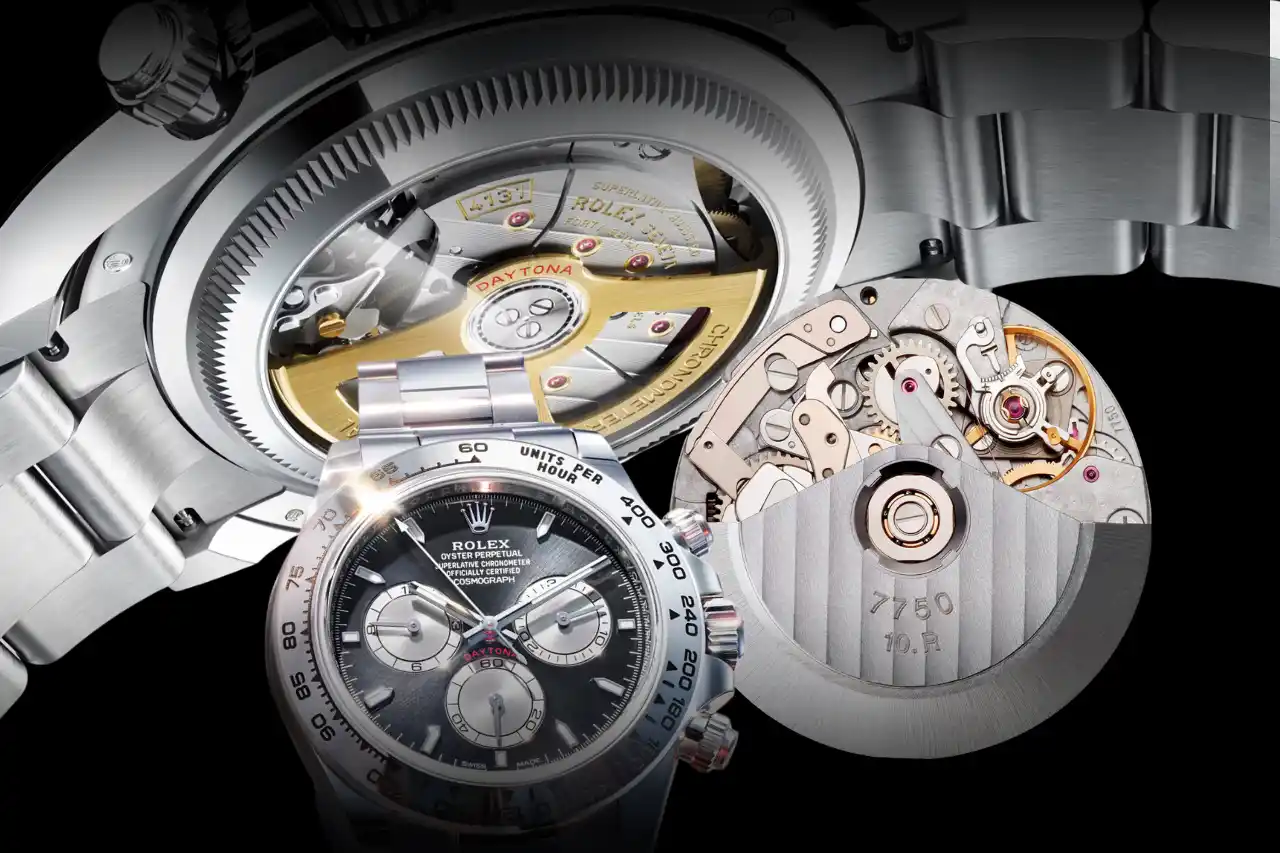
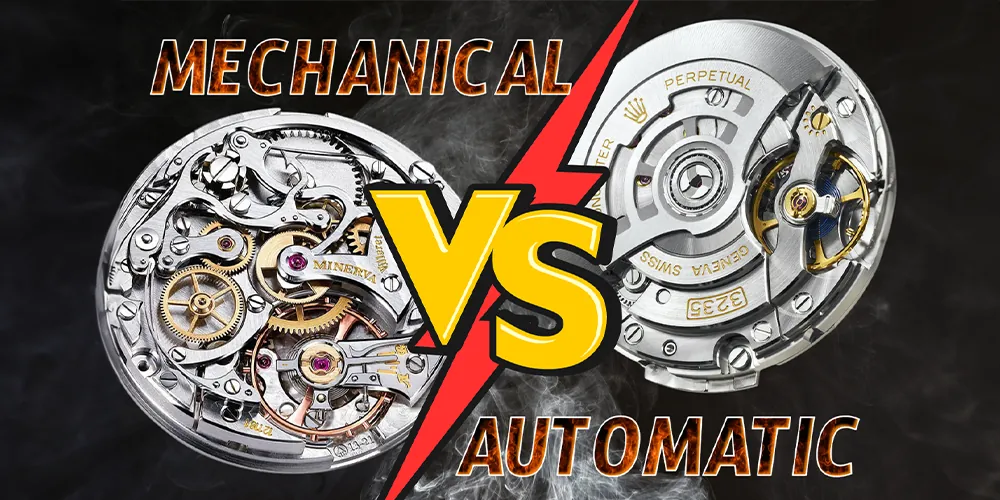
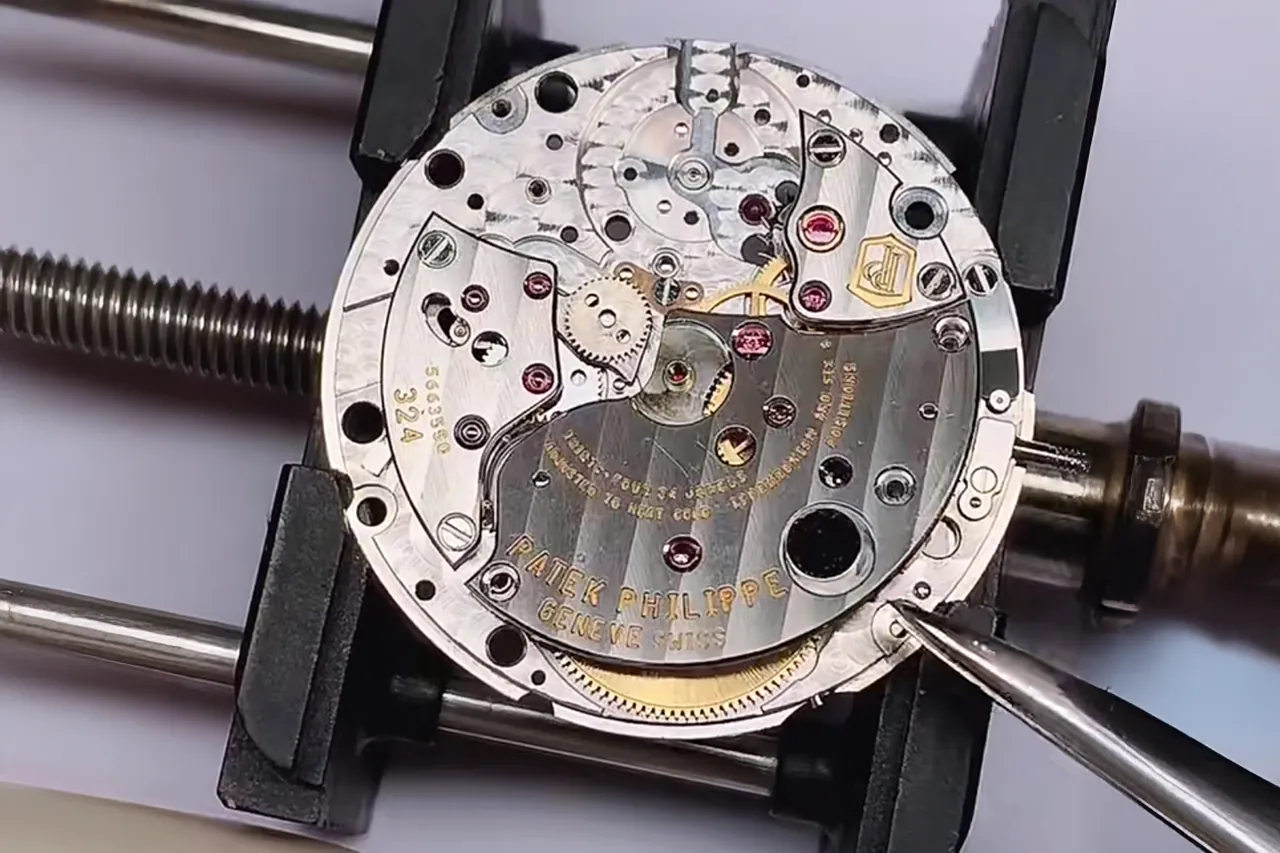
An automatic watch uses a mechanical movement powered by a mainspring, which stores energy to keep the watch running. As the watch moves on your wrist, a rotor turns and winds the mainspring, replenishing the watch’s power reserve.

As the mainspring releases its stored energy, a series of gears transfers it through the movement. The escapement regulates the release of this energy, while the balance wheel oscillates to help the watch keep time accurately.
These components work together to keep the watch running. When they function as intended, the movement maintains its expected timekeeping performance.
Why Does My Automatic Watch Lose Time
Several factors can contribute to slow timekeeping. Understanding how the watch is worn and when the time loss occurs can help narrow down the possible causes.
1. Insufficient Winding or Low Power Reserve
An automatic watch relies on energy stored in its mainspring. As you wear it, the rotor uses your wrist movements to wind the mainspring and replenish its power reserve. If the watch receives insufficient movement, it may not wind fully.
Depending on the movement and how fully wound it is, the watch may run for around 40 hours or several days after you take it off. When its stored energy runs out, it stops. When the mainspring is only partly wound, it delivers less energy to the balance wheel, so the wheel swings through a smaller arc, known as its amplitude. On many movements, lower amplitude makes the watch run slower and less consistently, which is why a watch worn for only a few hours a day can lose more time than one worn all day.
Leaving a watch unworn until its power reserve runs out does not normally damage it. However, if it stops sooner than the manufacturer’s stated power reserve despite being wound correctly, a winding or mechanical issue may need investigation.
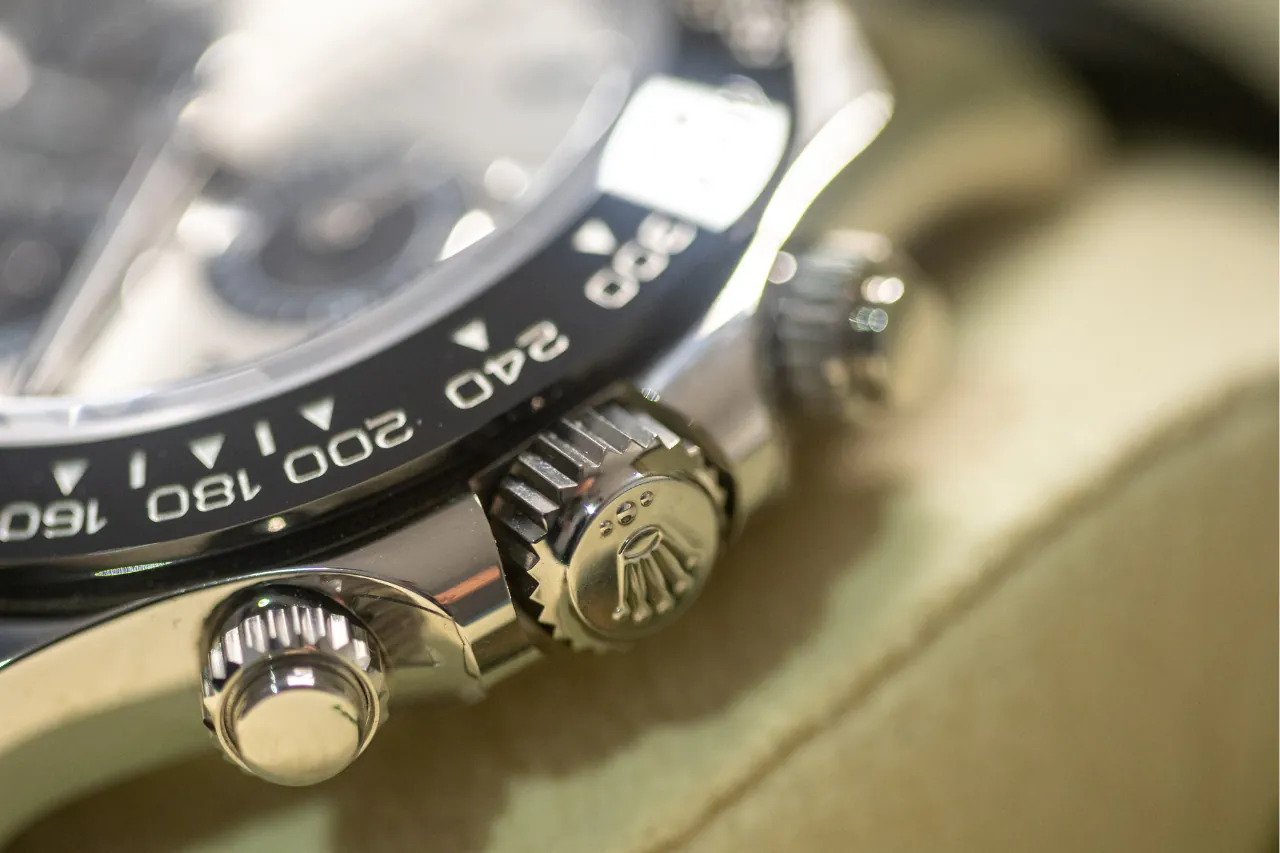
What you can do: On most automatic watches, you wind the movement by unscrewing the crown if it is a screw-down type, leaving it in its first position and turning it gently, usually clockwise, around 20 to 30 times. Always follow the manufacturer’s instructions, as the required number of turns varies by movement. If it continues to lose significant time despite sufficient winding, have a watchmaker assess whether regulation, demagnetisation, servicing or another repair is needed.
2. Positional Variation
An automatic watch can keep slightly different time depending on its position. For example, its accuracy may vary when worn on the wrist compared with when it is left resting dial-up or on its side overnight.
Gravity affects the movement’s balance wheel and other components, influencing how consistently the watch keeps time in different positions. Although watchmakers regulate movements to account for positional variation, small differences may remain. The extent of these variations depends on the individual watch and its movement.
What you can do: If you remove your watch at night, observe whether its accuracy changes depending on how it is positioned. Record the results over several nights to identify any consistent pattern. A different resting position may help offset a small, consistent timekeeping deviation, but the result varies by watch and will not resolve an underlying mechanical issue.
3. Temperature Changes
Temperature changes can affect the accuracy of a mechanical watch. Heat and cold can influence the movement’s components and lubricants, changing how consistently the watch keeps time. The direction and extent of the effect depend on the movement’s design.
Modern watches are designed to operate under normal wearing conditions, but exposure to extreme temperatures can still affect their performance. For example, leaving a watch on a car dashboard in direct sunlight may expose it to excessive heat.
What you can do: Avoid exposing your watch to extreme heat or cold, and follow the manufacturer’s guidance for use and storage. If its accuracy changes after unusual temperature exposure, monitor its performance once it has returned to normal conditions. If the time loss persists, have the watch inspected by a watchmaker.
4. Magnetism
Magnetic fields can affect certain components in a mechanical watch, particularly the hairspring in movements that use a magnetically susceptible hairspring. When the hairspring becomes magnetised, its coils may stick together, disrupting the movement’s timekeeping and often causing the watch to run fast.
However, the effects of magnetism can vary depending on the movement and the extent of exposure. It is therefore not always the cause when an automatic watch loses time.
Potential sources include strong magnets in accessories, magnetic clasps and speakers. The risk depends on the strength of the magnetic field and the watch’s resistance to magnetism.
What you can do: For a quick check at home, hold a compass close to the watch and slowly move the watch around it. If the needle shifts as the watch moves, the watch may be magnetised and is worth having checked. If your watch’s accuracy changes after possible exposure to a strong magnetic field, have a watchmaker check whether magnetism is affecting its performance.
5. Worn Components or Lubrication Problems
An automatic watch relies on precisely fitted components and specialised lubricants to keep its movement running smoothly. Over time, lubricants can deteriorate or become contaminated, while internal components may wear with continued use.
These changes can affect the movement’s performance, causing the watch to lose time, become less consistent or experience a reduced power reserve. However, slow timekeeping alone does not confirm that the watch needs a full service, as regulation issues and other mechanical faults can produce similar symptoms.
What you can do: Consider the watch’s service history and whether its accuracy has changed over time. Most automatic watches benefit from a full service every three to five years, and our guide to how often to service your timepiece explains what affects the right interval for your watch. If your watch is overdue, worn lubricants become a more likely explanation. If it consistently loses time or its performance becomes increasingly irregular, arrange a professional inspection.
6. Impact Damage or Another Internal Fault
A hard knock or drop can affect the delicate components responsible for regulating a mechanical watch. Depending on the severity and location of the impact, the watch may lose time, gain time or become inconsistent, even if there is no visible damage to the case or crystal.
Other internal faults can also affect timekeeping. Problems involving the balance assembly, winding mechanism or other movement components may interfere with the watch’s performance. However, these issues cannot reliably be identified from the amount of time lost alone.
What you can do: If your watch’s accuracy changes suddenly after a drop or strong impact, have it inspected by a watchmaker rather than attempting to adjust or diagnose the movement yourself.
Condensation inside the crystal is another reason to seek prompt professional attention, as moisture can damage the movement.
How Much Time Loss Is Normal for an Automatic Watch
Acceptable accuracy varies widely by movement and manufacturer. Many everyday automatic watches perform within roughly 5 to 15 seconds per day, but some manufacturers specify wider tolerances, so a watch losing several seconds a day may still be within its expected performance range.
For reference, COSC-certified mechanical wrist chronometers must meet a mean daily rate tolerance of −4 to +6 seconds per day under prescribed testing conditions. This is a certification standard, not a universal requirement for all automatic watches.
Everyday accuracy can vary with wearing habits, resting position, temperature and the movement’s condition. Monitor your watch over several days and compare its performance with the manufacturer’s specifications.
Is Losing 15 or 30 Seconds a Day Too Much
Losing 15 or 30 seconds per day may fall outside the expected accuracy range of some watches, but the acceptable tolerance depends on the specific model.
Consider whether the time loss has always occurred or started recently. If your watch consistently falls outside its expected accuracy range, a watchmaker can measure its rate and determine whether regulation or further investigation is needed. Avoid adjusting the movement yourself, as the cause may require more than a simple adjustment.
How to Check If Your Automatic Watch Is Losing Time
You can carry out a simple check at home to measure your automatic watch’s timekeeping accuracy.
- Set the correct time: Compare your watch with a reliable reference clock, such as Time.gov, and set it as accurately as possible.
- Ensure sufficient power: Wind the watch according to the manufacturer’s instructions if necessary.
- Compare after 24 hours: Check your watch against the same reference clock and record the difference in seconds.
- Monitor over several days: Repeat the check to see whether the time loss is consistent.
If your watch is running slow, work through the simpler possibilities first. Wind it fully and measure its rate over a few days. If it is still outside its specification, think about whether it may have been near a strong magnet, then try a different resting position overnight. If none of these explain the time loss, the cause is more likely to be inside the movement, and a watchmaker’s assessment is the sensible next step.
| What you notice | What to check first |
| It loses time after a day or two unworn | Wind it fully, then measure again |
| A small, steady loss every day | Compare it with the manufacturer’s accuracy specification |
| A sudden change in accuracy | Possible magnet exposure or a recent knock |
| Accuracy changes overnight | Its resting position |
| A gradual decline over months | Its service history |
| Condensation, rattling or stopping after winding | Have a watchmaker inspect it |
When Should You Take Your Automatic Watch to a Watchmaker
Not every slow-running automatic watch needs a full service. However, certain changes in timekeeping or condition may indicate that professional inspection is necessary.
Consider having your watch checked if you notice any of the following:
- Persistent time loss: The watch consistently falls outside the manufacturer’s stated accuracy range.
- Sudden changes in accuracy: It starts losing or gaining noticeably more time than usual.
- Significant time loss despite sufficient winding: The watch continues to lose time even when adequately wound.
- Accuracy issues after an impact: The watch becomes inaccurate following a knock or drop, even if there is no visible damage.
- Reduced power reserve: The watch no longer runs for its expected duration under comparable conditions.
- Condensation under the crystal: Moisture is visible inside the watch and requires prompt professional attention to minimise potential damage.
- Unusual rattling sounds: A new or unusual sound coming from inside the case may indicate a loose or damaged component and should be checked by a watchmaker.
- Does not run after manual winding: If the watch does not start or stops again shortly after being wound correctly according to the manufacturer’s instructions, it may have a mechanical fault that requires inspection.
How Can a Watchmaker Fix an Automatic Watch That Is Losing Time
A watchmaker may use a timegrapher to measure a movement’s rate and assess indicators such as amplitude and beat error. Amplitude is how far the balance wheel swings with each beat. If it stays low even when the watch is fully wound, worn lubricants or a tired mainspring are more likely causes than a simple winding issue. These readings help evaluate the movement’s performance alongside the watch’s condition and symptoms.

The appropriate solution depends on the cause. Insufficient winding may be addressed by following the manufacturer’s winding instructions, while magnetism may require demagnetisation. Other issues may need regulation, repair or servicing.
A watchmaker can confirm which of these applies to your watch before any work is carried out.
FAQs
1. Why Does My Automatic Watch Lose Time?
Common causes include insufficient winding, positional variation, temperature changes or problems within the movement. Magnetism more often makes a watch run fast, but it can occasionally cause erratic or slow timekeeping too. If your watch consistently loses significant time or its accuracy changes suddenly, have it inspected by a watchmaker.
2. Can Low Power Reserve Make an Automatic Watch Lose Time?
It can affect timekeeping in some movements, depending on their design and condition. Wind your watch according to the manufacturer’s instructions and monitor its accuracy. If it continues to lose significant time, the cause may be unrelated to power reserve.
3. Does Magnetism Always Make an Automatic Watch Run Fast?
No. Magnetism often causes a mechanical watch to run fast, but its effects vary depending on the movement and exposure. A watchmaker can check whether magnetism is affecting its timekeeping.
4. Can I Fix an Automatic Watch That Loses Time Myself?
You can check the simple causes yourself by winding the watch fully, measuring its rate over several days and trying a different resting position overnight. Anything involving the movement itself, such as regulation or demagnetisation, is best left to a watchmaker.
Final Word
An automatic watch can lose time because of normal mechanical variation, insufficient winding, positional differences, environmental factors or wear within the movement. The amount of time lost and whether the behaviour has changed are useful clues when identifying the possible cause.
Start by comparing the watch against a reliable time source over several days. If the loss is significant, continues despite sufficient winding or appears alongside other symptoms, a professional inspection can help establish whether the watch needs adjustment, repair or servicing.
Key Takeaways
- Automatic watches naturally gain or lose some time, but acceptable accuracy depends on the movement’s specifications.
- Insufficient winding, positional variation, temperature, magnetism and mechanical issues can all affect timekeeping.
- Measuring accuracy over several days helps establish whether the time loss is consistent.
- Regulation, demagnetisation and servicing address different problems, so the cause should be identified before deciding on the work required.
- Sudden or significant time loss, a reduced power reserve or a condensation issue are reasons to seek professional inspection.
If your automatic watch continues to lose time despite sufficient winding, the cause may require further investigation. Watchlab can assess your watch’s timekeeping and help determine whether adjustment, repair or servicing may be needed. Contact Watchlab today to arrange a professional assessment.